
Fish-shaped bag pattern using fabric scraps is a creative and practical sewing project that transforms leftover fabric pieces into a charming handmade accessory.
One of the greatest advantages of making a Fish-shaped bag pattern using fabric scraps is that it encourages sustainable sewing.
Another reason this project remains popular among sewing enthusiasts is its versatility. A completed Fish-shaped bag pattern using fabric scraps can be used as a coin purse, cosmetic pouch, pencil case, travel organizer, gift bag, or storage pouch for sewing accessories. Because the project combines basic sewing techniques with decorative patchwork possibilities, it is suitable for beginners while still offering enough creative freedom to keep experienced quilters and sewists inspired.
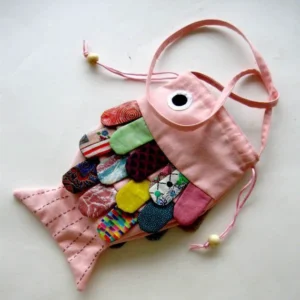
Choosing Fabrics and Preparing Your Fish-shaped Bag Pattern Using Fabric Scraps
Before beginning your Fish-shaped bag pattern using fabric scraps, gather a variety of coordinating fabric remnants. Quilting cotton works exceptionally well because it is easy to sew, durable, and available in countless colors and prints. Combining florals, polka dots, stripes, and solids creates an attractive patchwork effect that enhances the playful fish shape.
For a medium-sized bag similar to the project shown, prepare enough fabric scraps to assemble two fish-shaped panels measuring approximately 12 inches long and 8 inches high at the widest point. You will also need lightweight fusible interfacing, a zipper measuring about 10 inches, matching thread, batting if a quilted finish is desired, and lining fabric.
Essential sewing tools include a rotary cutter, acrylic ruler, self-healing cutting mat, sewing clips or pins, fabric scissors, iron, ironing board, seam ripper, and a sewing machine equipped with a standard presser foot and zipper foot. Having all supplies ready before starting allows the sewing process to remain organized and enjoyable.
Press every fabric scrap before cutting. Smooth fabric ensures more accurate measurements and cleaner seams throughout construction. If you plan to combine multiple scraps into larger panels, sew those patchwork sections first before cutting the fish template.
Prepare a paper or cardboard template for the fish shape. Include the rounded body, pointed tail, and slightly curved mouth area. Trace the template onto both the exterior fabric and the lining while remembering to add a ¼-inch seam allowance around every edge.
Organizing your fabric pieces by color before assembling the patchwork helps balance the final design. Alternating light, medium, and dark fabrics creates visual interest while allowing the finished Fish-shaped bag pattern using fabric scraps to showcase every beautiful print.
Step-by-Step Fish-shaped Bag Pattern Using Fabric Scraps
Begin constructing your Fish-shaped bag pattern using fabric scraps by sewing together the selected fabric scraps into two large panels. Use a quarter-inch seam allowance and press every seam open or to one side after stitching. This patchwork foundation becomes the front and back of the fish-shaped bag.
Once both patchwork panels are complete, fuse lightweight interfacing to the wrong side of each exterior panel. If you would like additional structure, quilt the patchwork through batting using straight-line quilting or simple decorative stitching before cutting out the fish shape.
Place the paper template over the completed patchwork panel and carefully cut two identical fish-shaped exterior pieces. Repeat the same process using lining fabric so that you have matching interior pieces.
Install the zipper along the upper edge where the fish’s back will be located. Sew one zipper tape to an exterior panel and one lining piece, then repeat for the opposite side. Press carefully after each seam to ensure the zipper lies flat and opens smoothly.
With right sides together, sew around the fish body, leaving the zipper partially open before stitching the final seam. Carefully pivot around the curved head and pointed tail to maintain smooth edges. Trim seam allowances slightly around the curves to reduce bulk.
Turn the bag right side out through the open zipper. Gently shape the curves using a blunt turning tool and press the completed bag. Add embroidered eyes, decorative fins, buttons, or appliqué details if desired to bring your Fish-shaped bag pattern using fabric scraps to life.
Creative Customization Ideas
One of the greatest joys of creating a Fish-shaped bag pattern using fabric scraps is the opportunity to personalize every design. No two bags need to look alike, making each project a true expression of your creativity.
Bright tropical fabrics create cheerful summer-inspired fish, while soft blues and ocean-themed prints produce elegant coastal designs. Children’s versions can include vibrant rainbow fabrics that make the bag especially fun and playful.
Adding appliqué fins, embroidered scales, or textured quilting creates additional dimension. Simple curved quilting lines can imitate fish scales while adding stability to the finished pouch.
Consider sewing decorative buttons for the fish’s eyes or using embroidery floss to create smiling facial features. These small details give the finished project personality without requiring advanced sewing techniques.
The Fish-shaped bag pattern using fabric scraps can easily be resized. Smaller versions become coin purses or key pouches, while larger versions make excellent cosmetic bags, travel organizers, or craft storage pouches.
Personalized labels, monograms, or decorative charms attached to the zipper pull provide an extra finishing touch. These thoughtful additions make the bag even more special when given as a handmade gift.
Tips for Professional Sewing Results
Accurate cutting plays a major role in achieving a polished Fish-shaped bag pattern using fabric scraps. Taking time to align your template carefully helps both sides match perfectly during assembly.
Always use a consistent quarter-inch seam allowance throughout the project. Even seam allowances ensure the fish shape remains symmetrical after turning the bag right side out.
Press after every construction step rather than waiting until the project is complete. Well-pressed seams create flatter edges and improve the overall appearance of the finished bag.
If sewing around tight curves feels challenging, reduce your machine speed and pivot frequently. Small, controlled stitches produce smoother curves and minimize puckering around the fish’s rounded body.
Choose a zipper color that complements rather than competes with the patchwork fabrics. A coordinated zipper blends naturally into the design while maintaining a professional finish.
Most importantly, enjoy the creative process. Every completed Fish-shaped bag pattern using fabric scraps helps reduce fabric waste while providing another opportunity to practice sewing skills, experiment with color combinations, and create beautiful handmade accessories.
FAQ
Is the Fish-shaped bag pattern using fabric scraps suitable for beginners?
Yes. Beginners with basic sewing experience can successfully complete this project by following each construction step carefully.
What fabric works best?
Quilting cotton is the most popular choice because it is stable, durable, easy to sew, and available in countless coordinating prints.
Can I quilt the exterior?
Absolutely. Quilting the patchwork before assembly adds texture, durability, and a beautiful handmade appearance.
Do I need interfacing?
Interfacing is highly recommended because it helps the bag maintain its shape and provides additional support around the zipper.
Can I change the size?
Yes. Simply enlarge or reduce the fish template proportionally to create bags suitable for different purposes.
What can I store inside the bag?
The finished bag is perfect for coins, cosmetics, sewing notions, pencils, small electronics, travel accessories, jewelry, or other everyday essentials.
Can I wash the finished bag?
Yes. Cotton versions can generally be hand washed or machine washed on a gentle cycle. Allow the bag to air dry and press lightly if needed.
Is this project good for using leftover fabric?
Definitely. The Fish-shaped bag pattern using fabric scraps is specifically designed to transform leftover quilting and sewing fabrics into a beautiful, functional handmade accessory.
Creating a Fish-shaped bag pattern using fabric scraps is a rewarding sewing project that combines sustainability, creativity, and everyday practicality. Throughout this guide, you learned how to select suitable fabric scraps, prepare patchwork panels, cut accurate fish-shaped templates, install a zipper, assemble the bag step by step, personalize the design with decorative details, and finish the project with professional sewing techniques.
By transforming leftover fabrics into a charming handmade bag, you not only reduce waste but also create a unique accessory that reflects your personal style and sewing skills.
We hope this tutorial inspires your next sewing adventure and encourages you to experiment with new fabric combinations and creative embellishments. If you enjoyed this article, please leave your honest opinion and share your sincere suggestions or ideas for future sewing tutorials. Your feedback is always appreciated and helps inspire even more creative projects for fellow sewing enthusiasts.