
The Crochet cat pattern using soda can tabs is a creative and charming craft project that combines traditional crochet techniques with the reuse of everyday materials. If you enjoy making handmade decorations, adorable animal-inspired accessories, and unique crochet creations, this project offers an interesting way to explore your creativity while giving discarded soda can tabs a new purpose.
By combining yarn, a crochet hook, and carefully prepared aluminum tabs, you can create a little cat-inspired piece with personality and handmade charm.
One of the most enjoyable aspects of this Crochet cat pattern using soda can tabs is the opportunity to experiment with different colors, textures, and decorative details. The soda can tabs can serve as small structural elements within the design, while crochet stitches create the fabric that surrounds and connects them.
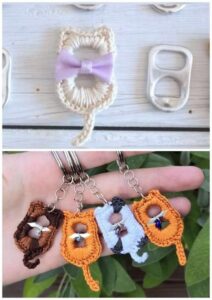
Depending on your preferences, the finished cat can become a small decorative ornament, a handmade accessory, or a thoughtful gift for someone who loves cats and creative crafts. Even if you are relatively new to crochet, you can approach this project one step at a time and develop your skills as you work.
Another wonderful feature of this project is its combination of crochet with recycled materials. Instead of throwing away clean aluminum tabs, you can prepare and incorporate them into a decorative handmade creation. This approach encourages resourcefulness and makes each finished piece a little different.
Before beginning, however, it is important to remember that soda can tabs have sharp edges and should never be used without proper preparation and inspection. For a beginner-friendly result, choose smooth, undamaged tabs, cover every exposed edge completely with yarn, and avoid leaving any metal accessible. With patience, suitable materials, and a little imagination, you can create a delightful crochet cat using soda can tabs that reflects your personal style.
Materials and Preparation for Your Crochet Cat Pattern Using Soda Can Tabs
Before starting your Crochet cat pattern using soda can tabs, gather all the materials needed to make the project comfortable and organized. You will need medium-weight cotton yarn in your preferred cat colors, a crochet hook appropriate for your yarn, several clean aluminum soda can tabs, scissors, a yarn needle, stitch markers, and optional embroidery thread for the facial details. Cotton yarn is a practical choice because it provides good stitch definition and makes it easier to cover the metal components securely.
For the main body, choose a color such as gray, white, black, brown, or cream. You can also combine two or three colors to create a striped or patchwork-inspired cat. Pink yarn works beautifully for the inner ears and nose, while black embroidery thread can be used for the eyes, whiskers, and mouth. If you want a more playful appearance, consider adding a small bow, a colorful collar, or a decorative flower.
The soda can tabs are the recycled components that make this craft distinctive. Collect only tabs that are clean, intact, and free from visible damage. Wash them thoroughly with soap and water, rinse them, and allow them to dry completely. Inspect every tab carefully before using it. Discard any piece with sharp projections, cracks, corrosion, or damaged edges. Never attempt to make a damaged tab safe simply by covering it with yarn.
Safety is especially important when working with recycled aluminum. Use only tabs that have been professionally prepared or safely enclosed in a protective structure that prevents contact with exposed edges. If you cannot guarantee that a tab is completely safe, substitute a lightweight plastic or crocheted ring. Keep all metal components inaccessible, particularly if the finished item may be handled by children or pets. A decorative cat made entirely from yarn is also an excellent alternative.
Before beginning the crochet portion, decide what type of cat you want to create. A small flat cat ornament is a suitable option for beginners because it requires fewer materials and simpler construction. A three-dimensional cat can include a rounded head, a small body, pointed ears, and a curved tail. For this tutorial, the suggested design uses a small crocheted body, two ears, a tail, and a securely enclosed decorative tab structure.
Understanding the basic crochet terminology will make the Crochet cat pattern using soda can tabs easier to follow. The instructions below use US crochet terminology. The main stitches include the chain stitch (ch), single crochet (sc), slip stitch (sl st), increase (inc), and decrease (dec). If you already know how to make these stitches, you will be able to follow the pattern with confidence. If you are a beginner, practice each stitch with a small yarn sample before assembling the cat.
Step-by-Step Crochet Cat Pattern Using Soda Can Tabs
Start by creating the main body of your cat. Make a magic ring (MR) with your chosen yarn and crochet six single crochet stitches into the ring. Pull the yarn tail gently to close the center. If you find the magic ring difficult, you can chain two stitches and work six single crochet stitches into the second chain from the hook. This will form the starting point of the rounded body.
Round 1: Work two single crochet stitches into each stitch around. You should have 12 stitches at the end of this round. Use a stitch marker to identify the first stitch so that you do not lose track of your rounds. Keeping your stitch count accurate will help the cat body maintain a balanced shape.
Round 2: Repeat the following sequence around: one single crochet in the first stitch, followed by an increase in the next stitch. Continue until you reach the stitch marker. You should now have 18 stitches. The gradual increases create a wider circular shape that will become the foundation of the cat’s body.
Round 3: Work one single crochet in each of the first two stitches, followed by an increase in the third stitch. Repeat this sequence around. At the end of the round, you should have 24 stitches. If the circle begins to curl slightly, check your tension and make sure that you have not accidentally skipped an increase.
Rounds 4–6: Crochet one single crochet into every stitch around without increasing. Maintain 24 stitches in each round. These rounds create the height of the body and provide enough space to incorporate the decorative recycled element. Keep the stitches firm and consistent so that the filling or internal structure does not become visible.
Next, prepare the decorative tab component. The Crochet cat pattern using soda can tabs can incorporate a fully enclosed tab as a decorative feature, but the metal must never be exposed. Place the professionally prepared, smooth tab inside a protective crocheted covering or an appropriate nonmetallic enclosure. Make sure the covering is secure and that no edge can be reached through the stitches. If necessary, make a separate crocheted pocket to contain the protected component.
To create a simple covering, crochet a small oval using chains and single crochet stitches. Chain eight, work a single crochet in the second chain from the hook, and continue across the remaining chains. Work three single crochet stitches into the final chain to turn the oval, then crochet along the opposite side of the foundation chain. Increase at the ends as necessary to maintain an oval shape. Continue working until the covering is large enough for the protected decorative insert.
Place the enclosed component inside the body only if the entire assembly remains secure and inaccessible. Otherwise, attach the crocheted oval as an external decorative feature without including metal. Continue crocheting the body until it reaches the desired shape. If you are making a stuffed cat, add a small amount of fiberfill before closing the opening. Do not overfill the piece, as excessive pressure can distort the stitches or compromise the enclosure.
To finish the body, gradually decrease the stitches. Work one single crochet in each of the first two stitches, followed by a decrease. Repeat around to reduce the circumference. Continue decreasing in subsequent rounds until the opening is small enough to close neatly. Fasten off, leaving a yarn tail, and use a yarn needle to close the remaining stitches securely.
Now make the cat’s ears. Start with a magic ring and crochet four single crochet stitches into it. In the next round, work one single crochet in each stitch. In the following round, increase in two evenly spaced positions to create a slightly wider base. Continue for another round if you want taller ears. Fasten off, leaving a long tail for sewing. Make two identical ears and attach them symmetrically to the top of the head.
For the tail, chain approximately 12 stitches, depending on the size of your cat. Starting in the second chain from the hook, work one single crochet into each chain. If you prefer a thicker tail, crochet two rows and fold the piece lengthwise before sewing it together. You can also use a slightly contrasting yarn color to make the tail more noticeable.
The facial details give the crochet cat its personality. Use black embroidery thread to create two small eyes, a triangular nose, and a delicate mouth. You can add whiskers with a few simple embroidery stitches on each side of the nose. Make sure that all decorative elements are firmly secured. For toys intended for young children, embroidered features are preferable to small plastic components.
Finally, attach the ears and tail to the body using a yarn needle. Weave in all loose ends carefully and inspect the finished project. Check that the stitches are secure, the shape is balanced, and no metal edges or small loose components are exposed. Your Crochet cat pattern using soda can tabs is now complete, ready to display as a handmade decorative creation.
Customization, Finishing Techniques, and Creative Ideas
One of the best things about the Crochet cat pattern using soda can tabs is how easily you can customize its appearance. You can make a classic black cat, a soft gray kitten, an orange tabby, or a white cat with colorful details. Changing the yarn colors is an easy way to create several different versions without changing the basic construction. You can even make a collection of small cats inspired by the different personalities and appearances of real cats.
Texture is another interesting element to explore. Cotton yarn creates a neat and defined finish, while soft acrylic yarn gives the cat a slightly fluffier appearance. You can also experiment with boucle yarn for selected decorative details. However, avoid yarn that makes it difficult to inspect the stitches and confirm that every recycled component remains completely covered.
The recycled soda can tab craft can also be adapted into different decorative formats. For example, you can make a flat cat-shaped ornament with a crocheted tab-inspired center, or create a small hanging decoration with a yarn loop. If you prefer not to use actual aluminum, crocheted rings can reproduce a similar visual effect while making the project easier and safer to handle.
Pay attention to the finishing process because it has a major influence on the final appearance. Use a yarn needle to hide loose ends inside the crocheted fabric. Check the seams around the ears, tail, and body. If you notice any gaps, reinforce them with additional stitches. A neat finish makes the project look more professional and helps it maintain its shape over time.
Blocking is not usually necessary for a small stuffed cat, but lightly shaping the flat crochet components can improve their appearance. If you have made flat ears or decorative patches, arrange them carefully and adjust their shape before attaching them. Avoid applying heat directly to the yarn or any recycled component. Follow the care instructions for your yarn and keep the finished project away from excessive moisture.
This handmade cat can be a lovely addition to a craft collection or a decorative display. It can also be a thoughtful handmade gift for someone who enjoys crochet and animal-inspired projects. If you are planning to give it as a present, include a small card explaining that it is a handmade decorative piece and that any recycled materials are fully enclosed. Do not present a metal-containing version as a pet toy or an item suitable for unsupervised handling by young children.
Frequently Asked Questions About Crochet Cat Pattern Using Soda Can Tabs
1. Is the Crochet cat pattern using soda can tabs suitable for beginners?
Yes, the basic crochet construction is suitable for beginners who know how to make chain stitches, single crochet stitches, increases, and decreases. The most important part is following the stitch counts and assembling the pieces carefully. If you are completely new to crochet, practicing the basic stitches before beginning will make the process easier.
2. What type of yarn is best for this crochet cat pattern?
Medium-weight cotton or acrylic yarn works well for this project. Cotton provides good stitch definition and a firm finish, while acrylic offers a softer texture and a wide range of colors. Choose a yarn that is easy to work with and suitable for the intended decorative use.
3. Can I use any soda can tab for this project?
No. Only intact, clean, undamaged tabs that have been professionally prepared and safely enclosed should be considered. Tabs with sharp edges, corrosion, cracks, or irregular projections must be discarded. If you cannot ensure that the metal is completely inaccessible, use a crocheted or plastic alternative.
4. How many soda can tabs do I need?
The number depends on the design. A small decorative cat may use one protected tab as a central decorative element, while a larger design may incorporate several enclosed components. The pattern can also be completed without any actual metal tabs.
5. Can I make this crochet cat without a magic ring?
Absolutely. Instead of a magic ring, chain two stitches and work the required single crochet stitches into the second chain from the hook. This is a useful alternative for beginners who find the magic ring difficult.
6. How can I make my crochet cat look more realistic?
Pay attention to the ears, facial expression, tail, and color combinations. Small embroidered details can make a significant difference. You can also use different shades of yarn to reproduce the appearance of tabby, calico, black, or white cats.
7. Can I turn this pattern into a keychain?
The crochet design can be adapted into a decorative keychain by making a smaller version and attaching a securely installed keychain finding. However, avoid using exposed aluminum tabs or components that could detach. A lightweight, fully crocheted design is generally more appropriate for everyday handling.
8. How do I keep the crochet stitches from becoming loose?
Maintain consistent yarn tension throughout the project and use a crochet hook suitable for your yarn. If the stitches are too loose, try a slightly smaller hook. Check the fabric regularly to ensure that there are no large gaps through which internal materials could become accessible.
9. How should I clean my finished crochet cat?
Cleaning depends on the yarn and internal materials. For a simple yarn-only decoration, gentle spot cleaning with a slightly damp cloth is often sufficient. Avoid soaking a project containing metal or other enclosed components unless the materials are specifically designed to withstand washing. Allow the piece to dry completely before storing it.
10. Is this project suitable as a toy for cats or small children?
A decorative crochet cat containing soda can tabs is not recommended as a pet toy or an unsupervised children’s toy. Small components, metal materials, and loose yarn can create safety hazards. For a child-friendly decorative project, use soft yarn throughout, embroidered facial details, and no metal inserts.
11. Can I change the size of the crochet cat?
Yes. You can increase or decrease the number of stitches and rounds to make a larger or smaller cat. When adjusting the size, remember to maintain symmetrical proportions between the head, ears, and tail. Use the same yarn weight and hook size for consistent results.
12. What can I do if my cat’s body looks uneven?
First, check your stitch counts and make sure that the increases and decreases are distributed evenly. Uneven tension can also affect the shape. If necessary, undo the affected round and crochet it again. Taking time to correct small mistakes will improve the final appearance of your handmade cat.
Conclusion
The Crochet cat pattern using soda can tabs is an imaginative way to combine crochet techniques, creative design, and the reuse of everyday materials. Throughout this tutorial, you learned how to select suitable yarn, prepare your materials, create the rounded body, crochet the ears and tail, add facial details, and assemble the finished cat. You also discovered how to incorporate the visual idea of recycled soda can tabs while prioritizing safe construction and keeping potentially sharp metal completely inaccessible.
Whether you choose a traditional cat color, experiment with bright combinations, or create several different versions, this project offers plenty of opportunities to express your creativity. Remember that careful stitch counting, secure assembly, and thoughtful finishing are essential to achieving a beautiful result. You can also adapt the design to create different decorative pieces using entirely crocheted alternatives.
Have you tried making a Crochet cat pattern using soda can tabs? We would love to hear your honest opinion! Leave a comment sharing your experience, the colors you would choose, and any suggestions or creative ideas that could improve this pattern. Your feedback can inspire other crochet enthusiasts and help everyone discover new ways to enjoy handmade crafts.