
Creating a Patchwork chicken- Step by Step Tutorial is not only a fun sewing project but also a wonderful way to use up leftover fabrics and add a touch of charm to your home décor. Patchwork projects have been around for centuries, bringing together scraps of fabric to create something both beautiful and useful. A patchwork chicken is a beginner-friendly design that allows you to explore color combinations, practice simple sewing skills, and end up with a cheerful handmade decoration or even a toy.
When you choose to make a Patchwork chicken, you will find it to be a versatile craft project. You can create them in different sizes, use them as pincushions, or even as adorable gifts for family and friends. The beauty of this tutorial is that it requires very few materials, making it budget-friendly and eco-conscious. By reusing fabric scraps, you contribute to reducing textile waste while creating something unique and heartfelt.
This Patchwork chicken- Step by Step Tutorial is designed for both beginners and more experienced crafters. It walks you through the process in a clear, simple way so you can enjoy the journey of making something handmade. Whether you are new to patchwork or already passionate about sewing, this project will allow you to experiment with textures, patterns, and stitches, while improving your crafting skills in an enjoyable and creative way.
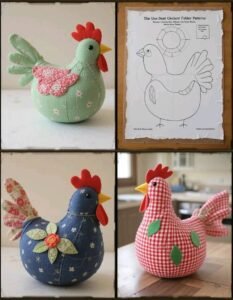
Materials Needed for Patchwork Chicken
To start your Patchwork chicken- Step by Step Tutorial, you will first need to gather all the necessary supplies. The good news is that most of the materials are items you probably already have at home, especially if you sew regularly. Having everything ready before you begin will help the process go smoothly.
The most important component of this project is fabric. Choose leftover fabric scraps in different colors and patterns. Cotton is the easiest material to work with, as it is stable and easy to sew. You can mix florals, stripes, checks, or solids to give your chicken a fun and patchy personality. Try to balance the patterns so that your design looks cheerful but not overwhelming.
You will also need sewing tools like scissors, pins, a sewing machine (or a needle if you prefer hand sewing), and matching thread. If you want your chicken to have a firm body, you will need stuffing such as polyester fiberfill or even small fabric scraps. This ensures that your chicken has volume and shape.
For added charm, you can prepare some embellishments. Buttons can be used for eyes, or you can embroider them with black thread. Felt pieces are perfect for making the beak and comb. Little ribbons or bows can also give your chicken a playful finishing touch. The idea is to personalize it and make it reflect your style.
One key tip for beginners is to iron the fabric scraps before cutting them. This makes it easier to work with the pieces and ensures that your Patchwork chicken looks neat and professional. Pre-washing the fabric is also recommended to avoid shrinking after sewing.
With these materials at hand, you are ready to begin. The project is simple, but preparation is key. Once you have everything gathered, you can move to the cutting and sewing process.
Cutting and Preparing the Fabric
The first step in this Patchwork chicken- Step by Step Tutorial is preparing your fabric pieces. Patchwork relies on combining small shapes of fabric into a bigger design, so accuracy in cutting is essential. Begin by deciding the size of your chicken. Small versions are perfect as ornaments, while larger ones can serve as cuddly toys or even as decorative cushions.
Start by cutting squares or triangles from your chosen fabrics. A simple method is to use squares of equal size, around 2×2 inches for small chickens or 4×4 inches for larger ones. Consistency in size will make it easier to sew them together neatly. Use a ruler and fabric marker to ensure straight lines before cutting.
Arrange your cut pieces on a flat surface to preview how the colors and patterns will look together. This step allows you to experiment with combinations until you find a layout that is visually pleasing. It’s a playful part of the process where you can mix bright colors with neutrals or create a more uniform style.
Once you are satisfied with the arrangement, pin the pieces together in rows. Make sure the edges align well. This preparation step may seem time-consuming, but it makes the sewing process much easier and prevents mistakes.
If you are making a chicken with a detailed shape, such as wings, a comb, or a tail, you can cut small additional pieces of fabric or felt. These parts will be sewn into the main body later, giving your chicken a more realistic appearance.
Ironing the cut pieces before sewing is a helpful trick. Flat pieces are easier to stitch together, and it helps your seams to look crisp and professional once finished. With your fabric ready, you can move on to the most exciting part: sewing your Patchwork chicken.
Sewing the Patchwork Chicken
Now comes the main stage of the Patchwork chicken- Step by Step Tutorial: sewing the pieces together. Start by sewing the fabric squares or triangles row by row. Place two pieces right sides together and sew along one edge with a straight stitch. Continue adding pieces until you complete a row, then press the seams flat with an iron.
Next, sew the rows together, again aligning the edges carefully. Patience is essential here because precise seams will give you a neat result. Once the body’s main fabric piece is complete, you will have a colorful patchwork panel ready to be shaped into a chicken.
To form the chicken body, fold the patchwork panel in half, right sides facing each other. Cut it into a triangular or oval shape, depending on the style you want. Sew along the edges, leaving a small opening for turning it right side out. After turning it, stuff the inside with fiberfill or fabric scraps to give it volume.
At this point, you can add details such as wings or a tail. Sew small additional shapes of fabric or felt onto the sides of the chicken body. These parts give your chicken personality and make it more recognizable. You can also stitch a comb on top of the head and a small triangle for the beak.
For the eyes, either sew on buttons or embroider small circles using black thread. Always secure embellishments tightly, especially if you plan to give the chicken to children. Safety is just as important as aesthetics in handmade crafts.
Once the chicken is stuffed and detailed, close the opening with invisible stitches. Take your time with this step to ensure it looks neat. By now, your chicken should already look charming and cheerful, showing off its patchwork beauty.
Finishing Touches and Creative Ideas
The final stage of this Patchwork chicken- Step by Step Tutorial is all about personalization and creativity. Adding finishing touches makes your handmade chicken truly unique and gives it character.
One idea is to accessorize your chicken with a small bow or ribbon around its neck. You can also add embroidery, such as tiny flowers or patterns, to the patchwork pieces. This extra stitching not only decorates but also reinforces the seams.
If you enjoy working with different textures, consider mixing fabrics like felt, denim, or lace in your patchwork design. The contrast in texture will make your chicken even more interesting. For example, using lace for the wings can add a delicate and charming effect.
Another creative idea is to make chickens in different sizes and create a whole family of patchwork chickens. These can be displayed together on a shelf, used as seasonal decorations, or given as gifts. Each chicken can have its own personality depending on the fabric choices and details you add.
For practical use, you can also adapt the pattern into a pincushion or a doorstop by adding heavier filling, such as rice or beans, at the bottom. This shows how versatile the Patchwork chicken design can be.
Most importantly, enjoy the creative process. Sewing is not only about the finished product but also about the joy of making something with your hands. Every patchwork chicken will be unique, carrying the charm of your creativity and effort.
FAQ about Patchwork Chicken
1. Is the Patchwork chicken project suitable for beginners?
Yes, this project is beginner-friendly. The Patchwork chicken- Step by Step Tutorial uses simple stitches and basic shapes, making it perfect for those just starting with sewing.
2. What type of fabric works best for patchwork chickens?
Cotton fabric is the most recommended. It is easy to cut, sew, and iron. However, you can experiment with other fabrics like linen or felt to create different textures.
3. How do I make my patchwork chicken more durable?
To make your chicken last longer, reinforce the seams by double stitching and use high-quality thread. Also, pre-wash the fabric to avoid shrinking later.
4. Can I make the patchwork chicken without a sewing machine?
Yes, you can hand sew the entire project. It may take longer, but the result will be just as charming. A backstitch is recommended for durability.
5. What can I use to stuff the patchwork chicken?
Polyester fiberfill is the most common stuffing, but you can also use fabric scraps, rice, or beans if you want to create a weighted version.
6. Can children participate in making patchwork chickens?
Yes, children can help with safe tasks like choosing fabrics, arranging pieces, or stuffing. However, adults should handle sewing, scissors, and small embellishments for safety.
Conclusion
In this Patchwork chicken- Step by Step Tutorial, we explored how to create a charming handmade chicken using fabric scraps. From gathering materials, cutting and preparing fabric, sewing the body, to adding creative finishing touches, this project is simple yet rewarding. Patchwork chickens can serve as decorations, gifts, or even practical items like pincushions or doorstops.
This tutorial proves that sewing can be fun, sustainable, and creative. Every chicken you make will be unique, full of personality, and a reflection of your style.
Now that you know how to make your own patchwork chicken, we would love to hear your thoughts. Please leave a sincere opinion and share any suggestions you may have for future tutorials. Your feedback is always welcome!