
Square patchwork coaster pattern is one of the easiest and most rewarding sewing projects for beginners and experienced quilters alike.
One of the greatest advantages of making a Square patchwork coaster pattern is that it allows you to use leftover fabric pieces from previous quilting or sewing projects.
Another reason why the Square patchwork coaster pattern remains a favorite among sewing enthusiasts is its versatility. You can create classic designs using matching fabrics, experiment with bold modern color combinations, or choose seasonal prints for holidays and special occasions. The finished coasters can easily coordinate with table runners, placemats, kitchen décor, or quilted table toppers, creating a cohesive handmade style throughout your home.
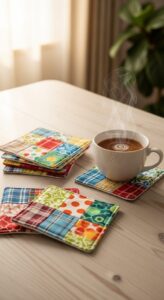
Choosing Materials and Preparing Your Square Patchwork Coaster Pattern
Before beginning your Square patchwork coaster pattern, gather all the necessary supplies. Quilting cotton is one of the best choices because it is durable, easy to sew, and available in countless colors and prints. High-quality cotton also helps the coaster maintain its shape after repeated use and washing.
Select four coordinating fabric squares for the patchwork front. A popular size is four squares measuring 2½ x 2½ inches each, which create a finished patchwork block measuring approximately 4½ x 4½ inches before adding seam allowances and quilting. Feel free to adjust the measurements if you prefer larger coasters.
For the backing fabric, cut one square measuring approximately 5 x 5 inches. This slightly larger piece provides enough room for trimming after quilting and ensures clean, even edges in the finished project.
Cut one piece of cotton batting measuring approximately 5 x 5 inches. The batting adds softness, insulation, and stability while helping protect your furniture from hot or cold beverages. Thin cotton batting is usually the best option because it keeps the coaster flexible without becoming bulky.
Prepare your sewing machine with a universal needle suitable for quilting cotton and use high-quality polyester or cotton thread that complements your fabric colors. Matching thread creates a subtle appearance, while contrasting thread highlights the quilting stitches.
Finally, press every fabric piece before assembling the coaster. Smooth, wrinkle-free fabric improves cutting accuracy and makes sewing much easier, resulting in sharper corners and better alignment throughout the project.
Step-by-Step Instructions for Sewing the Square Patchwork Coaster Pattern
Begin assembling your Square patchwork coaster pattern by arranging the four fabric squares into your preferred layout. Move the colors around until you achieve a balanced design that is visually pleasing. Taking a few extra minutes to plan the arrangement often produces a much more attractive finished coaster.
Place the top two squares right sides together and sew them using a standard ¼-inch seam allowance. Repeat the same process with the bottom two squares. Press both seams open or to one side according to your preferred quilting method.
Next, place both completed rows right sides together. Carefully match the center seam where the rows meet, pin the pieces in place, and sew using another ¼-inch seam allowance. Press the finished patchwork block flat to remove any bulk.
Layer the coaster by placing the backing fabric right side down, followed by the cotton batting, and finally the completed patchwork block right side up. Smooth each layer carefully to eliminate wrinkles before pinning or clipping everything securely together.
Quilt through all three layers using straight lines, diagonal lines, crosshatch quilting, or simple stitch-in-the-ditch techniques. Besides adding decorative detail, quilting keeps the batting securely in place and helps the coaster withstand frequent washing and daily use.
Trim the coaster so all edges are perfectly square. Finish the edges by sewing on binding or by placing the backing and front right sides together before stitching around the edges, leaving a small opening for turning. Turn the coaster right side out, press carefully, and finish with a neat topstitch around the entire edge.
Helpful Tips for Creating a Professional Square Patchwork Coaster Pattern
Maintaining an accurate ¼-inch seam allowance is one of the most important aspects of a successful Square patchwork coaster pattern. Consistent seams ensure that every square aligns properly and that the finished coaster remains perfectly symmetrical.
Always press after each seam rather than waiting until the entire project is assembled. Pressing improves accuracy, reduces bulk, and creates crisp intersections that give patchwork its polished appearance.
Choose fabrics with similar weights whenever possible. Mixing very thin fabrics with heavier materials may cause uneven seams and make quilting more difficult. Quilting cotton provides the most reliable results for beginners and experienced sewists alike.
If you are making multiple coasters as a matching set, cut all fabric pieces at the same time using a rotary cutter, acrylic ruler, and self-healing cutting mat. Batch cutting improves consistency and saves valuable sewing time.
Consider experimenting with decorative quilting designs once you become comfortable with the basic construction. Simple grids, diagonal stitching, echo quilting, or gentle free-motion quilting can give every coaster a unique handmade character without making the project overly complicated.
Before using the finished coaster, inspect all seams and trim any loose threads. This final quality check gives your project a clean, professional appearance while increasing its durability for everyday use.
Creative Ideas for Using Your Square Patchwork Coaster Pattern
A handmade Square patchwork coaster pattern is perfect for protecting dining tables, coffee tables, desks, and bedside tables from heat, moisture, and scratches caused by cups or mugs. Besides being functional, the colorful patchwork instantly adds charm to any room.
Create seasonal coaster collections by choosing fabrics that reflect spring flowers, summer colors, autumn leaves, or winter holidays. Changing your coasters throughout the year is an easy way to refresh your home décor without major expense.
These patchwork coasters also make wonderful handmade gifts. Pair four or six matching coasters with a favorite mug, a bag of coffee, herbal tea, or homemade cookies to create a thoughtful gift for birthdays, holidays, housewarming parties, or teacher appreciation events.
You can coordinate your coaster set with matching table runners, placemats, fabric baskets, napkins, or kitchen accessories. Using the same fabric collection throughout your sewing projects creates a cohesive and elegant handmade style.
For craft fairs and online handmade shops, coaster sets remain consistently popular because they are affordable, practical, and appeal to a wide range of customers. They also allow you to showcase beautiful fabric combinations while making excellent use of fabric scraps.
As your sewing skills improve, experiment with different patchwork layouts such as checkerboards, pinwheels, half-square triangles, flying geese, or log cabin blocks. These variations keep the Square patchwork coaster pattern exciting while helping you develop new quilting techniques.
FAQ About Square Patchwork Coaster Pattern
Is the Square patchwork coaster pattern suitable for beginners?
Yes. This is one of the best beginner sewing projects because it teaches accurate cutting, seam allowances, pressing techniques, quilting, and finishing methods without requiring advanced skills.
What fabric works best?
One hundred percent quilting cotton is generally the best choice because it is durable, easy to sew, presses well, and maintains its shape after repeated washing.
What size should each fabric square be?
A common size is four squares measuring 2½ x 2½ inches, producing a finished coaster that measures approximately 4½ to 5 inches square depending on the finishing method.
Do I need batting inside the coaster?
Yes. Cotton batting provides insulation, stability, and softness while helping protect surfaces from both hot and cold drinks.
Can I wash handmade patchwork coasters?
Absolutely. Machine wash on a gentle cycle using mild detergent, then lay flat or tumble dry on low heat according to the fabric manufacturer’s recommendations.
Can I make larger coasters?
Certainly. Simply increase the size of each patchwork square or add additional fabric squares while maintaining consistent seam allowances.
What quilting design is easiest?
Straight-line quilting is usually the simplest option for beginners. It stabilizes the coaster while creating a clean and timeless appearance.
Are patchwork coasters good gifts?
Yes. Handmade coaster sets are practical, attractive, and appreciated by people of all ages, making them excellent gifts for many different occasions.
Conclusion
The Square patchwork coaster pattern is a timeless sewing project that combines creativity, practicality, and quilting fundamentals into one enjoyable experience. Throughout this guide, you learned how to choose suitable materials, cut accurate fabric squares, assemble a balanced patchwork design, quilt the layers, and finish the coaster with clean professional edges. These essential techniques build a strong foundation for many future quilting and sewing projects.
Because this project is quick to complete and makes excellent use of fabric scraps, it is perfect for beginners looking to improve their sewing confidence as well as experienced quilters who enjoy creating thoughtful handmade gifts and coordinating home décor. Every finished coaster reflects your personal choice of fabrics, colors, and quilting designs, making each piece completely unique.
We hope this Square patchwork coaster pattern has inspired your next sewing project. If you enjoyed this tutorial, please leave your honest opinion, share your experience making your own coaster set, and send us your suggestions for future patchwork and quilting tutorials. Your feedback helps inspire new creative ideas for the entire sewing community.