
Learning Crochet amigurumi turtle coaster- Step by Step Tutorial is a fun and rewarding way to combine creativity with practicality. A coaster shaped like a cute turtle not only protects your table surfaces but also adds a touch of charm and handmade beauty to your home. This project is suitable for both beginners who want to improve their crochet skills and more experienced crafters who enjoy making functional and decorative pieces. Throughout this tutorial, we will go step by step to explain every detail so you can confidently create your own turtle coaster.
Crochet has always been a craft that connects people to tradition while allowing them to explore modern and playful designs. By making a crochet amigurumi turtle coaster, you can learn the basics of shaping amigurumi while working on a project that is quick, useful, and delightful. The turtle design is not only appealing to adults but also loved by children, making it a great handmade gift idea. With just a few basic stitches, some yarn, and a crochet hook, you will be able to turn simple materials into a functional and adorable piece.
This step by step tutorial will guide you through selecting the right yarn, understanding the stitches, shaping the turtle body, and finishing your coaster neatly. Whether you are making one coaster or a full set, you will discover that this project is a relaxing, creative, and satisfying crochet journey. Let’s dive into the process and learn together how to make your own turtle coasters that will bring both joy and utility to your home.
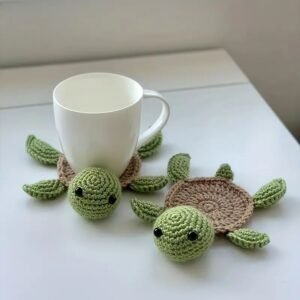
Materials and Preparation for the Crochet Amigurumi Turtle Coaster
Before starting the crochet amigurumi turtle coaster- step by step tutorial, it’s important to gather all the right materials. You will need cotton yarn, since it is durable and absorbent, making it perfect for coasters. Choosing the right colors will also make a big difference, as green or brown shades are usually great for a turtle design, but you can also experiment with fun colors to personalize your project.
The crochet hook size will depend on the yarn you select. Typically, a 3mm to 4mm hook works well for this type of project. Having a yarn needle on hand will also help you when sewing the parts together. Stitch markers can be useful too, especially if you are still learning how to keep track of your rounds.
Make sure you also prepare a pair of scissors to cut your yarn neatly. For stuffing the turtle’s small head or feet, you can use a little bit of fiberfill, although the coaster body itself will remain flat. This way, the coaster will remain practical while still featuring the amigurumi effect in the turtle details.
Proper preparation ensures a smooth crocheting process. When everything is ready before you start, you can focus on enjoying the craft instead of constantly stopping to find missing tools. Take time to check your yarn tension and make a few test stitches to adjust before beginning the project.
This preparation step is essential in any step by step tutorial because it sets the foundation for a successful result. The more comfortable you are with your tools and materials, the more enjoyable your crochet journey will be.
Step by Step Instructions to Crochet the Turtle Coaster
The first step in this crochet amigurumi turtle coaster- step by step tutorial is creating the base of the coaster. Start with a magic ring and work single crochets into it. This technique ensures a tight, neat center without a hole. As you increase in rounds, you will form a flat circle, which becomes the turtle’s shell. Keep your stitches consistent and count carefully to maintain symmetry.
Once the circle reaches the desired size for a coaster, you can add decorative touches to the shell. For example, you can alternate colors to create a patterned effect, or add textured stitches such as puff stitches to give a shell-like appearance. The shell is the largest part of the project, so it is also the most fun to personalize.
Next, you will crochet the turtle’s head. This is usually a small round ball made using amigurumi techniques. Work in continuous rounds and stuff it lightly with fiberfill so it holds shape. The head can then be attached to the shell at one side, forming the beginning of the turtle shape.
After finishing the head, create the four legs. Each leg is crocheted as a small tube or oval, then sewn evenly around the shell. These give the coaster its playful turtle appearance and add the “amigurumi” touch to an otherwise flat project. The legs do not need stuffing; keeping them flat makes the coaster more practical.
Don’t forget the turtle’s tail, a very small triangular piece that balances the overall design. This tiny detail adds realism and makes your coaster even more charming. Attach it opposite the head for symmetry.
Once all the parts are attached, weave in the yarn ends neatly with a needle. If you want, you can embroider small details like eyes on the head, or use safety eyes if you prefer a more amigurumi style. At this stage, your crochet turtle coaster is complete and ready to use.
Tips for Beginners Making the Turtle Coaster
One of the most important tips in this crochet amigurumi turtle coaster- step by step tutorial is to maintain even tension in your stitches. Uneven tension can cause the coaster to curl or warp, making it less functional. Practicing single crochet rounds before starting the project can be a big help.
Beginners should also use stitch markers to mark the beginning of each round. This makes counting stitches easier and reduces mistakes, especially when working in continuous rounds. If you accidentally miss or add stitches, your coaster may lose its circular shape.
Choosing the right yarn type also makes a big difference. Cotton yarn is highly recommended because it absorbs moisture well and lies flat. Acrylic yarn may work, but it can be slippery and less practical for coasters. The right yarn ensures that your final product is both beautiful and useful.
Another helpful tip is to block your coaster after finishing it. Blocking means slightly wetting the crochet piece and pinning it into shape to dry. This step helps your coaster look more professional and lie completely flat.
Don’t be discouraged if your first coaster is not perfect. Like any craft, crochet requires practice. Each project you complete will improve your skills and build your confidence. The turtle coaster is a great project for beginners because it is small, quick, and forgiving of minor mistakes.
Finally, remember that handmade items don’t have to be flawless to be beautiful. The charm of your amigurumi turtle coaster comes from the care and creativity you put into it. Each coaster will be unique, which is part of the magic of crochet.
Creative Variations and Gift Ideas
Once you master the crochet amigurumi turtle coaster- step by step tutorial, you can experiment with creative variations. For example, try making turtles in bright, unexpected colors like pink, purple, or even rainbow shades. These make fun and cheerful coasters that brighten any table.
You can also create themed sets of coasters. For example, a set of four turtles in different shades of green could make a thoughtful housewarming gift. Adding embroidered initials on each shell makes them even more personal and special.
If you enjoy mixing textures, try using different stitches for the shell. Adding bobbles or raised stitches creates a realistic shell look, while stripes make a more modern design. These small changes can turn a simple project into something truly unique.
Another idea is to scale up the pattern. By using thicker yarn and a larger hook, you can create a turtle-shaped potholder or hot pad. This variation makes your crochet skills even more versatile and useful.
Turtle coasters are also great for children’s rooms or parties. They add a playful touch to the table and are sure to bring smiles. Handmade items like these always stand out because they show care and creativity.
Finally, consider selling your finished turtle coasters at craft fairs or online shops. People love buying handmade, cute, and functional items. This project could become not only a fun hobby but also a small business opportunity.
FAQ About Crochet Amigurumi Turtle Coaster
1. Can beginners follow this crochet amigurumi turtle coaster- step by step tutorial?
Yes, this project is beginner-friendly. As long as you know basic stitches like single crochet and can work in rounds, you will be able to complete it.
2. What yarn is best for turtle coasters?
Cotton yarn is the best choice because it is durable, absorbent, and heat-resistant, making it perfect for coasters.
3. How long does it take to make one coaster?
On average, it takes about 2 to 3 hours to make one coaster, depending on your crochet speed and experience level.
4. Do I need stuffing for the coaster?
You only need a small amount of stuffing for the head. The shell and legs should remain flat so the coaster can function properly.
5. Can I wash my crochet turtle coaster?
Yes, cotton yarn coasters are machine washable. However, it is better to wash them gently and let them air dry to maintain shape.
6. Can I make other animals using the same tutorial?
Yes, with some creativity, you can adapt the pattern to make coasters shaped like frogs, ladybugs, or other animals. The basic process remains similar.
Conclusion
In this article, we explored the complete crochet amigurumi turtle coaster- step by step tutorial, covering everything from gathering materials to adding final details.
We learned how to create the shell, head, legs, and tail, as well as tips for beginners and fun variations for advanced crocheters. This project is not only practical but also delightful, making it a perfect choice for gifts or personal use.
Now that you know the steps, it’s time to try making your own turtle coaster. Remember, practice will improve your skills, and each coaster you create will have its own charm. We hope this tutorial inspires you to continue exploring the creative world of crochet. Please leave your sincere opinion and suggestions below—we would love to hear about your experience with this project.