
Learning how to make a crochet coaster – step by step tutorial is one of the most enjoyable and practical ways to dive into the world of crochet. Coasters are small projects, which means they are perfect for beginners while still being creative and stylish for advanced crafters. With just a hook, some yarn, and a little bit of time, you can create functional and decorative pieces that brighten your table and protect your furniture.
One of the greatest advantages of following a crochet coaster – step by step tutorial is that it allows you to learn the basic stitches while producing something useful. These little projects are excellent for practicing consistency in stitch size, working in the round, and understanding how increases shape your work. Many crocheters also love that coasters can be personalized with different colors and yarn types, making them ideal as gifts or as a way to decorate your home according to the season.
In this article, we will go through a complete crochet coaster – step by step tutorial, designed to be beginner-friendly yet detailed enough for anyone who wants to improve their crochet skills. We’ll cover the materials you need, the basic stitches, how to follow the pattern, and even creative variations you can try. By the end, you’ll not only know how to crochet a coaster but also how to adapt the design to your own style.
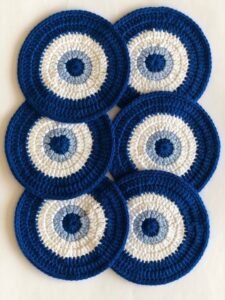
Materials and Tools for Crochet Coaster
To start your crochet coaster – step by step tutorial, the first thing you need is the right set of tools and materials. Without them, it’s easy to feel lost, so let’s go through everything carefully.
The main material is yarn, and for coasters, cotton yarn is the most popular choice. Cotton is durable, absorbs moisture well, and lays flat on the table, making it perfect for this project. While acrylic yarn can be used, it is often less absorbent and might not perform as well. Beginners often find medium-weight cotton yarn (also called worsted weight) the easiest to handle.
Next, you will need a crochet hook. The hook size depends on the thickness of your yarn, but for most coaster projects, a 4 mm to 5 mm hook works very well. It’s important to choose a hook that feels comfortable in your hand since you’ll be working with it for long periods of time. Ergonomic hooks are often recommended if you plan to crochet frequently.
Other useful tools include scissors for cutting yarn, a yarn needle for weaving in ends, and stitch markers to keep track of your rounds. Though stitch markers are not strictly necessary, they can be very helpful, especially when you are just starting out. Having a small basket or bag to keep your tools organized will also make the process smoother.
Color choices are where creativity shines. You can use a single color for a classic look, or mix and match colors for seasonal or festive coasters. Stripes, patterns, and even variegated yarns bring personality to your work. Because coasters are small, they are the perfect project for using up leftover yarn from larger projects.
Having these tools and materials ready before you start ensures that your crochet coaster – step by step tutorial experience is smooth and enjoyable. Once you are fully prepared, you can move on to the actual stitches and pattern.
Basic Stitches You Need to Know
Every crochet coaster – step by step tutorial begins with a review of the essential stitches. Mastering these stitches will give you the foundation you need not only for coasters but for many other crochet projects in the future.
The first stitch you need to learn is the chain stitch. It’s the foundation of almost every project and is created by looping the yarn around your hook and pulling it through. Practicing even chains helps you achieve consistent tension, which is very important for neat coasters.
Next is the slip stitch, which is used to join rounds or move across stitches without adding height. It’s a small but powerful technique that makes your coaster look seamless. Coasters are often worked in the round, and knowing how to use slip stitches to finish and connect rows is essential.
The single crochet is the most common stitch for coasters because it creates a dense, sturdy fabric. It is worked by inserting your hook into the stitch, pulling up a loop, and then completing the stitch. When repeated in the round, single crochets create a tight and solid base for your coaster.
The half double crochet is another useful stitch that provides a little more height and texture. Many coasters mix single crochet and half double crochet to create patterns that are both functional and decorative. Experimenting with these stitches will help you find the style you prefer.
You will also need to understand how to increase stitches in the round. Increases are made by working two stitches into one, which helps your coaster grow evenly and lay flat. Without proper increases, your coaster may curl or ripple. Practicing this step is key for success.
Finally, practice finishing off your work neatly. Learning how to weave in your yarn ends with a tapestry needle ensures that your coaster looks polished and lasts longer. These finishing touches make a big difference in the overall quality of your project.
Step by Step Crochet Coaster Pattern
Now that you understand the stitches, let’s go into the crochet coaster – step by step tutorial itself. This part will guide you through making a simple round coaster, which is one of the most popular designs.
Start with a slip knot on your hook and chain 4. Join the chain into a circle using a slip stitch. This creates the base ring where you will begin your coaster. Alternatively, you can use the magic ring technique, which allows you to pull the center tight for a cleaner look.
In the first round, make 6 single crochets into the ring. Use a slip stitch to join the round. At this point, your coaster will look like a small circle. Using a stitch marker here can help you keep track of where your round starts.
For the second round, increase by making 2 single crochets in each stitch. You should now have 12 stitches in total. Remember to keep your tension consistent to avoid puckering. This is the beginning of the flat, circular shape.
In the third round, make 1 single crochet in the first stitch, then 2 single crochets in the next stitch. Repeat this pattern around. This will increase your stitch count to 18. Each new round should expand evenly so that your coaster continues to lay flat.
Continue increasing in this way: in round four, alternate 2 single crochets with two single stitches, and in round five, alternate 2 single crochets with three single stitches, and so on. By repeating this method, your coaster will expand evenly and form a neat, round shape.
Once your coaster reaches the size you want, finish the edge with a slip stitch. Cut the yarn, leaving a small tail, and use your yarn needle to weave it in. Your basic coaster is now complete, and you can repeat the process to make a full set.
Creative Variations and Customization
After you master the basic crochet coaster – step by step tutorial, you can begin experimenting with creative variations. Coasters are the perfect project to try new stitches and color combinations without committing to a large project.
One popular option is to add stripes by changing colors every few rounds. This technique is easy to do and creates a lively design that can match your home decor or seasonal themes. For example, red and green stripes make festive holiday coasters.
Another idea is to use textured stitches such as puff stitch, shell stitch, or bobble stitch. These add depth and style to your coasters, making them stand out as decorative pieces. Textured stitches also give the coaster a unique feel when in use.
You can also create square or hexagon coasters instead of round ones. Working in rows rather than rounds gives you a new shape and allows for different design possibilities. These shapes are great for modern or geometric-themed decorations.
Edging is another way to customize your coasters. Adding a scalloped border or picot edging gives your project a delicate, handmade touch. Borders can transform a simple coaster into something elegant and gift-worthy.
Finally, think about personal touches. Using initials, motifs, or appliqué can make your coasters more meaningful. Personalized coasters are excellent for gifts, weddings, or special occasions. They showcase creativity and care in every stitch.
Experimenting with these ideas makes the crochet coaster – step by step tutorial not just a learning project, but a chance to express your personality and creativity through yarn.
FAQ About Crochet Coasters
1. How long does it take to make a crochet coaster?
Most coasters can be finished in 30 minutes to an hour, depending on your skill level and the pattern complexity.
2. Can I wash crochet coasters?
Yes, especially if made with cotton yarn. Machine wash on gentle or hand wash for best results. Lay flat to dry to maintain their shape.
3. What is the best yarn for crochet coasters?
Cotton yarn is recommended because it absorbs moisture, lays flat, and holds up well after repeated washing.
4. Do I need to block crochet coasters?
Blocking is not always necessary, but it can help your coasters lay flatter and look more professional.
5. Can beginners follow a crochet coaster tutorial?
Absolutely! Coasters are one of the easiest and most practical beginner projects.
6. How many coasters should I make for a set?
A typical set includes 4 to 6 coasters, but you can make as many as you like.
Conclusion
In this crochet coaster – step by step tutorial, we covered everything you need to know: from materials and stitches to following the full pattern and exploring creative variations. Coasters are small, fun, and functional projects that help you practice your skills while producing something useful and beautiful.
Now that you know the complete process, it’s your turn to try it out and see how creative you can get. I hope this tutorial inspired you to pick up your hook and yarn today.
Please leave your honest opinion and suggestions about this tutorial—I’d love to hear your feedback and see how your coasters turned out!