
Rectangular crocheted placemat-Step by Step Tutorial is a beautiful and practical project that adds a handmade touch to your dining table. Whether you are new to crochet or have some experience, creating a rectangular crocheted placemat is a wonderful way to practice stitches, explore textures, and create something both decorative and useful. This type of placemat is perfect for everyday meals, special dinners, or even as a lovely handmade gift. Because it is worked in rows and follows a simple pattern, it is suitable for beginners while still being enjoyable for more advanced crocheters.
When following this Rectangular crocheted placemat-Step by Step Tutorial, you will learn how to choose the right yarn and hook size, create a neat foundation chain, maintain stitch consistency, and finish your piece so that it lays flat and clean. The beauty of handmade placemats is that they can be customized in color, size, and stitch design. You can create placemats that match your kitchen or dining room décor, or make seasonal sets for holidays and celebrations. The process is relaxing and rewarding, and each placemat you complete will become a little work of art.
One of the advantages of making your own rectangular crocheted placemat is that it allows you to control the thickness and texture of the final piece. Some people prefer a dense stitch pattern for more protection and durability, while others like an open, airy texture for a more delicate look. In this tutorial, we will walk through essential steps and tips to ensure your placemat has clean edges, even stitches, and a professional finish. Now, let’s begin learning how to create your handmade placemat with this detailed Rectangular crocheted placemat-Step by Step Tutorial.
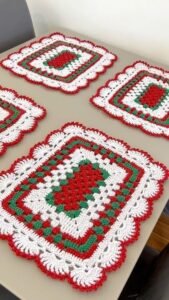
Materials Needed for the Rectangular Crocheted Placemat
To get started, you will need a few basic crochet supplies. Choosing the right materials can make a significant difference in the appearance and durability of your placemat. Taking a moment to gather everything before beginning will help your crafting experience feel smooth and enjoyable.
Cotton yarn is highly recommended for this project because it is absorbent, sturdy, and easy to wash. Cotton placemats are ideal for use in the kitchen or dining room since they hold up well to frequent handling and cleaning. You can pick a solid color for a simple look or choose stripes for a more decorative style.
A crochet hook that matches your yarn size is also important. Most cotton yarn labels will suggest a hook size, and using the recommended size will help your stitches look even. If you prefer a tighter fabric, choose a smaller hook; for a looser fabric, choose a larger hook.
You will also need scissors to trim yarn ends and a yarn needle to weave in any loose threads. Weaving in yarn ends properly ensures that your placemat stays neat and does not unravel over time. This finishing detail may seem small, but it makes a big difference in the quality of your project.
A measuring tape is helpful for keeping your placemat the size you want. Some people prefer large placemats that go under plates and cups, while others prefer smaller ones that hold only a plate. Measuring as you go helps you maintain consistent sizes, especially if you are making a full set.
Lastly, having a flat surface where you can lay your placemat as you work will allow you to check that it remains even and square. This helps prevent curling or stretching and ensures your finished piece looks professional and polished.
Starting the Foundation Chain and First Rows
The foundation chain is the starting point of your rectangular crocheted placemat, so it is important to begin with the right number of chains. The length of your foundation chain will determine the width of your finished placemat. Take your time to make the chain smooth and consistent.
When making your foundation chain, avoid pulling your yarn too tightly. Tight chains can make the edges curl and make the first row difficult to work into. Aim for a relaxed, even tension, which will help the rest of your stitches form neatly.
Once your foundation chain is complete, you will begin working your chosen stitch pattern. Many placemats use simple stitches like single crochet or half double crochet. These stitches create a firm texture that looks neat and holds its shape well.
As you work each row, count your stitches to ensure that the number remains the same from row to row. Losing or adding stitches accidentally can make the sides uneven. Counting will help ensure clean, straight edges.
To keep your edges looking neat, always turn your work the same way and place your turning chain carefully. This will maintain structure and uniformity throughout the project. A well-formed edge is one of the key features of a beautiful crochet placemat.
Continue working rows until your placemat reaches the desired length. Some makers prefer shorter placemats for compact tables, while others prefer longer ones to add visual impact. The length is entirely up to your preference.
Adding Texture and Decorative Stitches
To make your rectangular crocheted placemat more visually appealing, you can incorporate texture into your stitch pattern. Textured stitches can add personality and elevate the design, transforming it from simple to stylish.
You can experiment with stitches like the moss stitch, waffle stitch, or crossed double crochet. These patterns create interesting surfaces that look beautiful on dining tables. Even a basic stitch pattern can look sophisticated when repeated carefully.
Color changes can also add personality. Stripes are a simple way to introduce color variation without complicating the pattern. Make sure to weave in the ends securely to keep the back of the placemat tidy.
If you prefer a more minimalist style, you can stick to a single stitch throughout the placemat. Simplicity can look very elegant, especially if you are using a high-quality cotton yarn with a natural shine.
Another option is to add a border around the edges. Borders help give your placemat a completed look. A single round of single crochet can create a clean and strong outline. For a more decorative border, you can try picots or shell stitches.
Whatever style you choose, consistency is key. Maintain the same tension throughout your work to keep the placemat flat and even. With practice, you will see your skills improve with every completed project.
Finishing and Maintaining Your Crocheted Placemat
Once you have completed your rows, the next step in this Rectangular crocheted placemat-Step by Step Tutorial is to finish your piece neatly. Cut your yarn, leaving a small tail, and use your yarn needle to weave in the end securely. A well-woven end ensures longevity.
After weaving in all loose ends, gently block your placemat if necessary. Blocking helps the placemat lay flat and look polished. Simply moisten your placemat slightly, lay it on a flat surface, and shape it with your hands. Allow it to dry completely.
Your placemat is now ready for use. Cotton placemats are durable and can be washed gently by hand or in a washing machine. Use mild detergent and avoid high heat to prevent shrinking or fading.
If you are making a set of placemats, try to keep your tension and stitch count consistent across all pieces. This creates a matching set that looks professional and cohesive on your table.
Handmade placemats add warmth and personality to every meal. They are a lovely addition to your home and make thoughtful handmade gifts. With practice, you can create multiple designs for different occasions and seasons.
Now that you have completed this project, you may find yourself inspired to explore similar crochet home décor items. Table runners, coasters, and napkin rings are great projects to try next and pair beautifully with your placemats.
FAQ
What yarn is best for a crocheted placemat?
Cotton yarn is recommended because it is durable, washable, and holds its shape well.
Can I make a placemat larger or smaller?
Yes, simply adjust the starting chain and number of rows to achieve the desired size.
How long does it take to finish one placemat?
It depends on your speed, but many people finish one within a few hours.
Do I need blocking for my placemat?
Blocking is optional but helps create a smooth and flat finish.
Can I wash my crocheted placemat in a machine?
Yes, gentle washing is usually safe for cotton placemats.
Conclusion
In this Rectangular crocheted placemat-Step by Step Tutorial, we learned how to choose materials, create the foundation chain, work rows evenly, add texture, and finish the placemat beautifully.
This project is both relaxing and functional, making it a great addition to home décor or a thoughtful handmade gift.
I hope this tutorial has inspired you to create your own placemats and explore more crochet home projects. Please leave your honest opinion and suggestions, as your feedback helps improve future tutorials and guides.