
Stained glass quilt pattern artistry brings together the luminous beauty of colored glass and the comforting texture of fabric, creating a unique quilting experience that feels both timeless and innovative. From the very first stitch, the stained glass quilt pattern invites quilters into a world of contrast, light, and intricate design, where bold outlines mimic leading and vibrant fabrics replicate glowing panes. This technique has gained popularity among beginners and experienced crafters alike, offering endless possibilities for creativity while maintaining a structured and visually striking result.
The appeal of a stained glass quilt pattern lies in its ability to transform simple materials into something that resembles a handcrafted window. By using dark fabric strips to imitate the leading found in traditional stained glass, quilters can frame each colorful piece with precision and clarity. This method not only enhances the visual impact of the quilt but also provides a forgiving structure for those still developing their piecing skills. As a result, many crafters find this style both approachable and rewarding.
Beyond its aesthetic charm, the stained glass quilt pattern also carries a sense of storytelling. Each fabric choice represents a “pane” of color, allowing the quilter to express emotions, seasons, or themes through design. Whether inspired by nature, geometric patterns, or abstract art, this quilting style encourages individuality while maintaining a cohesive framework. It is this balance between structure and creativity that makes the technique so enduring and beloved.
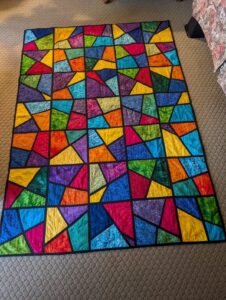
Understanding the Basics of a Stained Glass Quilt Pattern
The foundation of a stained glass quilt pattern begins with the concept of contrast. Dark strips, often black, are used to outline each fabric piece, mimicking the lead lines seen in real stained glass. These outlines are essential, as they define the shapes and give the quilt its signature look.
Another important element is fabric selection. Bright, bold, and varied colors are typically used to create the illusion of light shining through glass. Many quilters prefer batik fabrics or prints with subtle gradients, as they add depth and dimension to the overall design.
Cutting accuracy plays a significant role in achieving a polished result. Because the design relies on clean lines and defined shapes, precise cutting ensures that each “pane” fits perfectly within the pattern. Even small inconsistencies can affect the final appearance.
Sewing techniques for this style often involve either traditional piecing or appliqué methods. Some patterns use fusible web to attach fabric pieces before adding the leading strips, making the process easier for beginners.
The layout stage is where creativity truly shines. Quilters can experiment with different arrangements, shifting colors and shapes until the desired effect is achieved. This step allows for personalization and artistic expression.
Finally, pressing and finishing are crucial. Proper pressing ensures that seams lie flat, while careful quilting enhances the design without overwhelming it. The result is a quilt that looks both intricate and professionally crafted.
Choosing Fabrics and Colors for Maximum Impact
Selecting the right fabrics is one of the most exciting aspects of working with a stained glass quilt pattern. The goal is to create a vibrant interplay of colors that mimics the look of illuminated glass.
Color theory can be incredibly helpful in this process. Complementary colors create strong contrast, while analogous colors produce a more harmonious and subtle effect. Understanding these relationships can elevate the overall design.
Texture also plays a role in fabric selection. Fabrics with slight variations in tone or pattern can simulate the natural irregularities found in real glass, adding realism to the quilt.
It’s important to balance bold colors with neutral tones. While bright fabrics draw attention, too many competing colors can overwhelm the design. Strategic placement helps maintain visual clarity.
Many quilters find inspiration in nature, art, or architecture. Floral motifs, landscapes, and geometric designs all translate beautifully into a stained glass quilt pattern, offering endless possibilities.
Testing fabric combinations before committing to a final layout can save time and effort. Laying out pieces and viewing them from a distance helps ensure that the colors work well together.
Techniques and Tips for Creating Stunning Results
Mastering a stained glass quilt pattern involves understanding a few key techniques that enhance both efficiency and quality. One popular method is using bias tape or fabric strips to create the leading lines.
Appliqué techniques are often used to attach the fabric pieces to a background. Fusible web can simplify this process, allowing quilters to position pieces before stitching them permanently in place.
Maintaining consistent seam allowances is essential. This ensures that all pieces align correctly and that the leading lines remain even throughout the quilt.
Patience is a valuable skill in this process. Taking the time to carefully cut, place, and sew each piece results in a more polished and professional finish.
Quilting patterns should complement the design rather than compete with it. Simple stitching, such as straight lines or gentle curves, often works best for this style.
Regularly stepping back to assess progress can help identify any issues early on. This allows for adjustments before they become more difficult to fix.
Creative Variations and Personalization Ideas
One of the most appealing aspects of a stained glass quilt pattern is its versatility. Quilters can adapt the technique to suit their personal style and preferences.
Some choose to incorporate themed designs, such as seasonal motifs or symbolic imagery. This adds a narrative element to the quilt, making it even more meaningful.
Experimenting with different sizes and shapes can also create unique results. Larger panes offer a bold, modern look, while smaller pieces create intricate, detailed designs.
Adding embellishments, such as embroidery or decorative stitching, can enhance the visual appeal. These details provide texture and depth, making the quilt even more engaging.
Background fabrics can vary as well. While black is traditional, using other dark colors or even metallic tones can create a fresh and contemporary look.
Combining the stained glass quilt pattern with other quilting techniques opens up even more possibilities. Mixing styles can result in truly one-of-a-kind creations.
Stained Glass Quilt Pattern
What is a stained glass quilt pattern
A stained glass quilt pattern is a quilting style that uses dark fabric strips to outline colorful pieces, mimicking the appearance of stained glass windows.
Is this pattern suitable for beginners
Yes, many beginners find the stained glass quilt pattern approachable, especially when using fusible web and simple designs.
What fabrics work best for this style
Bright, bold fabrics such as batiks or prints with gradients are ideal for creating the glowing effect associated with stained glass.
Do I need special tools
While basic quilting tools are sufficient, items like rotary cutters, rulers, and fusible web can make the process easier and more precise.
Can I customize my design
Absolutely. The stained glass quilt pattern is highly versatile, allowing for endless customization in colors, shapes, and themes.
How long does it take to complete a quilt
The time varies depending on the complexity of the design and the quilter’s experience level, but patience and attention to detail are key.
What is the best way to quilt the finished piece
Simple quilting patterns often work best, as they enhance the design without distracting from the stained glass effect.
Conclusion
The stained glass quilt pattern offers a beautiful blend of structure and creativity, allowing quilters to create pieces that are both visually striking and deeply personal. Throughout this article, we explored the fundamentals of this technique, from understanding its basic principles to selecting fabrics, mastering essential methods, and exploring creative variations.
By combining careful planning with artistic expression, anyone can achieve stunning results with this style.As you begin or continue your journey with the stained glass quilt pattern, remember that each quilt is a reflection of your unique vision.
Take your time, experiment with colors and layouts, and enjoy the process of bringing your design to life. If you found this guide helpful, feel free to share your honest opinion and suggestions. Your feedback is valuable and helps inspire even more creative ideas in the quilting community.