
Denim basket pattern projects are a creative and practical way to transform old jeans into beautiful home organization pieces.
Working with denim is an excellent opportunity to practice sewing techniques while giving a second life to garments that might otherwise end up unused.
Another advantage of making your own denim basket pattern is the freedom to customize every detail. You can combine different denim shades, add decorative stitching, include pockets from old jeans, or personalize the basket with fabric labels and handles. Every basket becomes unique, reflecting your creativity while promoting sustainable crafting practices that reduce textile waste and encourage handmade home décor.
Choosing Materials for the Best Denim Basket Pattern
The first step toward a successful denim basket pattern is selecting high-quality denim. Medium-weight or heavyweight jeans work exceptionally well because they provide strength without becoming too difficult to sew. Avoid overly stretchy denim whenever possible, as it may not hold the basket’s shape as effectively after construction.
Begin by washing and drying the denim before cutting. Prewashing removes dirt, softens the fabric, and prevents unexpected shrinkage later. Iron the fabric thoroughly to create smooth cutting surfaces and ensure greater accuracy throughout the project.
For the basket lining, choose a sturdy cotton fabric that complements the denim. Quilting cotton, canvas, or cotton blends are excellent choices because they add a clean interior finish while remaining easy to sew. Coordinating colors create a polished appearance, although contrasting prints can also add personality.
Interfacing plays an important role in maintaining the basket’s structure. Heavy fusible interfacing, foam stabilizer, or sew-in stabilizer can all be used depending on how firm you want the finished basket to feel. A stable foundation ensures the basket stands neatly without collapsing.
Gather basic sewing tools before beginning. Sharp fabric scissors, clips or pins, a rotary cutter, quilting ruler, measuring tape, fabric marker, sewing machine, denim needle, matching thread, and an iron will help make every stage easier and more accurate.
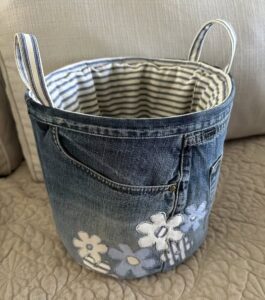
If the photo includes decorative seams, jean pockets, contrasting topstitching, or patchwork details, preserve those original denim features when cutting your fabric pieces. These authentic elements give the finished denim basket pattern a rustic handmade appearance while celebrating the character of recycled denim.
Cutting and Preparing the Fabric Pieces
Start by deciding on the finished basket dimensions based on your intended use. A medium storage basket generally requires one rectangular base and four side panels. Measure carefully before cutting to ensure every piece fits together perfectly.
Cut the exterior denim pieces first. If you are using different shades of denim, arrange them before sewing to create a balanced visual composition. Alternating light and dark denim panels produces an attractive patchwork effect without requiring complex piecing techniques.
Next, cut the matching lining pieces using the same measurements. Precision during this step helps prevent wrinkles or uneven seams when assembling the basket later. Keeping the lining identical to the exterior simplifies construction.
Cut the stabilizer according to the same measurements or slightly smaller if recommended by the manufacturer. Fuse or attach the stabilizer to the wrong side of the denim before assembling the basket. Press carefully to ensure strong adhesion without bubbles.
If your basket includes exterior pockets from recycled jeans, remove them carefully before cutting the denim. Stitch the pockets onto the exterior panels before joining the basket pieces. This creates functional storage while preserving the authentic denim look.
Mark seam allowances, fold lines, and corner guides using a washable fabric marker or tailor’s chalk. Accurate markings reduce mistakes during assembly and make the sewing process smoother from beginning to end.
Sewing the Denim Basket Pattern Step by Step
Begin by sewing the side panels together with a consistent seam allowance. Press each seam open or to one side after stitching. Proper pressing creates crisp lines and improves the overall appearance of the finished basket.
Attach the rectangular base to the assembled side panels slowly, matching each corner carefully. Sewing around corners gradually prevents puckering and helps maintain clean, square edges. Take your time during this stage for the best results.
Repeat the same process with the lining pieces. Leave a small opening in one side seam of the lining so the basket can be turned right side out after final assembly. This small opening will be closed later with a neat finishing stitch.
If handles are included in the photo, prepare them before joining the lining and exterior. Fold denim strips inward, press thoroughly, and stitch along both long edges for added durability. Secure the handles to the exterior basket using reinforced stitching.
Place the exterior basket inside the lining with right sides facing each other. Align all seams carefully and stitch around the top edge using clips to keep the layers stable. Consistent seam allowances create a professional finish.
Turn the basket right side out through the opening left in the lining. Close the opening with a ladder stitch or a narrow machine stitch, then push the lining neatly inside the basket. Finish with a topstitch around the upper edge to strengthen the rim and give the denim basket pattern a polished appearance.
Finishing Touches, Decorating, and Everyday Uses
Once the basket is complete, shape the corners by gently pressing them outward from the inside. This helps the basket maintain clean lines while maximizing interior storage space. Steam pressing can improve the final appearance even further.
Decorative topstitching is one of the easiest ways to enhance a denim basket pattern. Use contrasting thread, such as gold or beige, to imitate traditional jean stitching and create an authentic handcrafted finish that complements the recycled fabric.
Personalize the basket with appliqués, embroidery, fabric labels, buttons, or decorative patches if desired. These small additions make every project unique without affecting its practical function. Keep embellishments securely attached for long-term durability.
A completed denim basket pattern can organize sewing supplies, crochet hooks, yarn, knitting needles, remote controls, bathroom products, toys, pet accessories, or office materials. Its versatility makes it suitable for almost every room in the home.
To care for the finished basket, spot clean whenever possible. If machine washing becomes necessary, use a gentle cycle with cold water and reshape the basket while it dries. Proper maintenance helps preserve both the fabric and the basket’s structure.
As you gain confidence, experiment with larger baskets, divided organizers, oval bases, quilted panels, or combinations of denim with cotton prints. Every new version allows you to refine your sewing skills while creating beautiful handmade storage solutions that combine sustainability with everyday practicality.
FAQ
What is the best fabric for a denim basket pattern?
Medium-weight or heavyweight recycled denim is ideal because it provides strength, durability, and excellent structure for storage baskets.
Do I need stabilizer for a denim basket pattern?
Yes. Heavy interfacing, foam stabilizer, or sew-in stabilizer helps the basket keep its shape and stand upright after assembly.
Can beginners sew a denim basket pattern?
Absolutely. This project is suitable for beginners who already know basic straight stitching and want to practice working with heavier fabrics.
What sewing needle should I use for denim?
A denim or jeans needle, typically size 90/14 or 100/16, works well for most medium and heavyweight denim fabrics.
Can I recycle old jeans for this project?
Yes. Recycling old jeans is one of the biggest advantages of making a denim basket pattern, making it an eco-friendly and budget-conscious craft.
How can I make the basket more durable?
Use quality thread, reinforce stress points such as handles, add stabilizer, and finish with topstitching around the upper edge.
Can I wash the finished basket?
Yes. Gentle washing in cold water is recommended. Reshape the basket while it dries to maintain its original form.
What can I store inside a denim basket?
These baskets are perfect for yarn, sewing supplies, toiletries, baby items, toys, office accessories, cosmetics, craft tools, and many other household items.
Conclusion
Creating a denim basket pattern is an enjoyable sewing project that combines creativity, sustainability, and functionality.
Throughout this guide, you learned how to choose the right materials, prepare recycled denim, cut accurate fabric pieces, assemble the basket step by step, add professional finishing touches, and personalize the design to suit your home décor. By following these techniques carefully, you can produce a durable storage basket that is both practical and visually appealing while giving new life to old denim garments.
I hope this tutorial has inspired you to start your own denim basket pattern project with confidence. Handmade creations become even more meaningful when they are made from recycled materials and crafted with care. If you enjoyed this guide, please leave your honest opinion in the comments and share your suggestions or ideas for future projects. Your feedback helps inspire even more creative sewing tutorials for everyone.