
Denim strip keychain pattern projects are an excellent way to transform leftover denim into stylish, practical, and eco-friendly accessories.
One of the greatest advantages of making a Denim strip keychain pattern is its simplicity. Unlike larger sewing projects, this design requires only small fabric scraps, making it ideal for reducing waste while giving new life to worn denim garments.
Besides organizing your keys, a denim strip keychain can be attached to handbags, backpacks, travel bags, wallets, zipper pulls, or luggage. Many people also use them as personalized gifts, promotional items, party favors, or handmade products for online shops and local markets. Throughout this complete Denim strip keychain pattern tutorial, you will learn how to choose the best denim, prepare the fabric strips, sew the keychain securely, attach the hardware, and add professional finishing touches that make the final project durable and attractive.
Choosing Materials for a Durable Denim Strip Keychain Pattern
Before beginning your Denim strip keychain pattern, gather all the necessary supplies. Preparing your materials in advance makes the sewing process easier and helps ensure accurate, professional-looking results. Since this project is small, even tiny pieces of leftover denim can be used efficiently.
Medium-weight denim is usually the best option because it combines flexibility with strength. Fabric from old jeans works perfectly, especially sections taken from the legs where the material is generally smooth and easy to cut. Avoid denim that is extremely worn or stretched, as it may not provide enough durability.
You will also need matching sewing thread, fabric scissors or a rotary cutter, pins or sewing clips, a ruler, fabric chalk or a washable marker, a sewing machine or hand-sewing needle, and a sturdy metal key ring. Optional materials include decorative rivets, labels, embroidery thread, or metal hardware for added style.
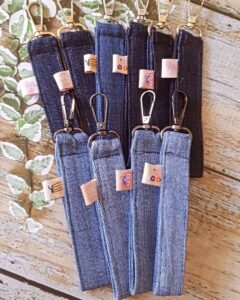
To recreate the project shown in the photo, cut one denim strip measuring approximately 25 centimeters long and 4 centimeters wide. These dimensions can easily be adjusted depending on the desired size of your finished keychain. A slightly wider strip creates a bolder appearance, while a narrower strip produces a more minimalist design.
For extra durability, you may add lightweight interfacing to the wrong side of the denim before folding the strip. This reinforcement helps the keychain maintain its shape over time, especially when used daily. Although optional, interfacing gives the finished accessory a firmer and more professional feel.
If your denim includes interesting details such as original jeans seams, decorative stitching, small pockets, or faded textures, consider incorporating these elements into your Denim strip keychain pattern. These unique characteristics add personality and make every handmade keychain truly one of a kind.
Step-by-Step Denim Strip Keychain Pattern Instructions
Begin by placing the denim strip with the wrong side facing upward. Fold each long edge inward toward the center by approximately one centimeter, pressing the folds with a warm iron to create crisp edges. This step hides the raw fabric edges and gives the keychain a clean appearance.
Next, fold the strip in half lengthwise so the folded edges meet neatly inside. Press once again with the iron to hold the folds securely in place. The finished strip should now be approximately one centimeter wide with enclosed raw edges.
Secure the folded strip using sewing clips or pins before stitching. Sew along both long edges using straight stitches approximately three millimeters from each edge. Slow, even stitching creates a strong seam while adding the classic topstitched appearance commonly seen on denim products.
Once the strip has been sewn, fold it in half to form a loop. Insert both raw ends through the metal key ring before aligning them evenly. This loop design creates a comfortable wrist strap or convenient handle that is easy to carry and locate inside a bag.
Position the aligned raw ends together and sew several reinforcing rows across the width of the strip approximately one centimeter below the key ring. Backstitch at both the beginning and end of each seam to maximize strength. Because this section supports the weight of the keys, multiple rows of stitching provide excellent durability.
Inspect the finished keychain carefully by trimming any loose threads and ensuring the key ring moves freely while remaining securely attached. If desired, lightly press the finished project one final time to smooth the fabric and enhance its appearance. Your beautiful Denim strip keychain pattern is now complete and ready for everyday use, thoughtful handmade gifts, or inclusion in your handmade craft collection.
Creative Ways to Customize Your Denim Strip Keychain Pattern
One of the biggest advantages of a Denim strip keychain pattern is its versatility. Once you have mastered the basic construction, you can personalize each keychain with colors, embellishments, and decorative details that reflect your own style. Even simple modifications can transform an ordinary project into a unique handmade accessory.
Using different shades of denim creates beautiful visual contrast. Combine light blue and dark indigo fabrics, or mix recycled denim from several pairs of jeans to achieve a modern patchwork effect. Every combination gives the keychain its own character while making excellent use of fabric scraps.
Decorative topstitching is another easy way to elevate your project. Classic jeans often feature golden or contrasting thread, so consider sewing parallel rows along the edges using heavy-duty topstitching thread. This detail gives your Denim strip keychain pattern an authentic and professional appearance.
Personalization is always appreciated. Embroider initials, names, meaningful dates, or small decorative motifs onto the denim before folding the strip. Simple embroidery transforms the keychain into a thoughtful keepsake for birthdays, holidays, graduations, or special celebrations.
Hardware can also change the overall style. Instead of a standard split key ring, you can add swivel clasps, lobster clasps, snap hooks, or decorative metal rings. These options allow the keychain to be attached to handbags, backpacks, belt loops, travel bags, or luggage with ease.
Finally, consider adding small fabric labels, leather tabs, rivets, decorative studs, or metal charms. These finishing touches complement the recycled denim beautifully while giving every Denim strip keychain pattern a polished handmade look that is suitable for gifts or craft market sales.
Tips for Professional Results and Common Mistakes to Avoid
Choosing high-quality denim makes a noticeable difference in the final result. Medium-weight denim provides the ideal balance of flexibility and durability. Fabric that is too thick may become difficult to fold, while fabric that is too thin may wear out more quickly.
Measure and cut the fabric strip carefully before beginning. Straight, accurate cuts make folding easier and help produce symmetrical edges. Using a quilting ruler and rotary cutter is particularly helpful if you plan to make multiple keychains.
Always press the folds with an iron before sewing. Pressing creates crisp edges, prevents shifting during stitching, and gives the finished Denim strip keychain pattern a much cleaner and more professional appearance.
When stitching the folded strip, sew slowly and maintain an even distance from the edges. Consistent stitching not only improves the appearance but also reinforces the structure of the keychain for everyday use.
Pay extra attention when attaching the key ring. Sew several reinforcing rows across the folded end and always backstitch securely. This area experiences the greatest amount of stress, so strong stitching greatly increases the lifespan of the finished accessory.
Before considering your project complete, inspect every detail carefully. Remove loose threads, verify that the hardware is securely attached, and gently press the finished keychain one final time. These small finishing steps help your Denim strip keychain pattern look professionally crafted and ready for daily use or gifting.
FAQ
Is the Denim strip keychain pattern suitable for beginners?
Yes. This project is ideal for beginners because it uses straight sewing lines, basic folding techniques, and only a small amount of fabric. It is a great way to practice sewing skills while completing a useful accessory.
What type of denim should I use?
Medium-weight denim from recycled jeans is highly recommended. It is durable, easy to sew, and gives the finished keychain the classic appearance associated with denim accessories.
Can I sew this project entirely by hand?
Absolutely. Although a sewing machine speeds up the process, strong hand stitching with quality thread produces excellent and durable results.
How long does it take to complete one keychain?
Most crafters can finish a Denim strip keychain pattern in approximately 20 to 40 minutes, depending on their sewing experience and the decorative details added.
Can I wash the finished keychain?
Yes. Hand washing with mild detergent and allowing the keychain to air dry is the safest method. This helps preserve both the denim fabric and the metal hardware.
What are some creative uses for denim strip keychains?
Besides holding keys, they can be attached to handbags, backpacks, suitcases, wallets, camera bags, sports bags, zipper pulls, and even used as decorative accessories for handmade gifts.
Is this project suitable for selling?
Definitely. Handmade denim accessories are popular because they are sustainable, practical, and stylish. Offering personalized embroidery, different hardware options, or custom colors can make your products even more attractive to customers.
How can I make the keychain more durable?
Use quality denim, reinforce the folded end with multiple rows of stitching, choose sturdy hardware, and trim all loose threads before finishing. These simple steps significantly improve the strength and longevity of your keychain.
Conclusion
Creating a Denim strip keychain pattern is a rewarding sewing project that combines creativity, sustainability, and functionality. Throughout this tutorial, you learned how to select the right denim, prepare the fabric strip, fold and press the edges, sew durable seams, securely attach the key ring, and apply professional finishing techniques that result in a stylish handmade accessory. Even with only a few basic sewing skills, you can transform leftover denim into a practical project that is both beautiful and long-lasting.
Whether you are making keychains for yourself, creating thoughtful handmade gifts, or building products for your craft business, this project offers endless opportunities for creativity. By experimenting with different denim washes, decorative stitching, embroidery, labels, hardware, and embellishments, you can create unique accessories that reflect your personal style while giving recycled materials a second life.
Thank you for reading this complete Denim strip keychain pattern tutorial. I hope it inspires you to start your own denim upcycling projects and enjoy the satisfaction of creating something useful by hand. If you found this guide helpful, please leave your sincere opinion in the comments and share your suggestions for future sewing tutorials. Your feedback is greatly appreciated and helps inspire even more creative handmade projects.