
Fabric keychain pattern is one of the easiest and most enjoyable sewing projects for beginners and experienced crafters alike.
One of the reasons why fabric keychains remain so popular is their versatility. They can be attached to house keys, backpacks, handbags, luggage, pencil cases, wallets, or even used as decorative zipper pulls.
Throughout this detailed guide, you will learn how to choose suitable fabrics, prepare the pattern pieces, reinforce the fabric with interfacing, sew clean seams, install key rings or swivel clasps, and personalize your finished accessory with decorative details. By following each step carefully, you will create a professional-looking Fabric keychain pattern that is durable, practical, and stylish enough for everyday use or gift giving.
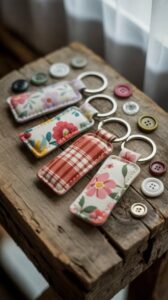
Choosing Materials and Preparing Your Fabric
Before beginning your Fabric keychain pattern, gather all the necessary materials. Quilting cotton is one of the best choices because it is lightweight, durable, and available in countless prints and colors. Canvas, linen, denim, and cotton blends also produce beautiful results depending on the style you want to achieve.
You will need fabric scraps measuring approximately 4 x 10 inches, lightweight fusible interfacing, matching sewing thread, scissors or a rotary cutter, sewing clips or pins, an iron, measuring ruler, key ring hardware or a swivel clasp, and optionally decorative labels or rivets for extra detail.
Apply fusible interfacing to the wrong side of the fabric according to the manufacturer’s instructions. This reinforcement helps the keychain maintain its shape while making it stronger for daily use.
Using a ruler and fabric marker, cut one rectangle measuring approximately 2 x 10 inches. You may adjust these measurements if you prefer a wider or narrower wrist strap or key fob. Precision during cutting ensures clean edges and a symmetrical finished project.
Press the fabric thoroughly before sewing. Smooth fabric eliminates wrinkles that could interfere with accurate stitching and produces a much more polished appearance.
If you would like a reversible keychain, choose two coordinating fabrics and sew them together before attaching the interfacing. Contrasting prints create a unique handmade accessory while allowing you to showcase multiple favorite fabrics.
Step-by-Step Sewing Instructions
Place the fabric strip wrong side up. Fold both long raw edges toward the center so they meet evenly. Press firmly with a warm iron to create crisp folds.
Fold the strip in half lengthwise once more, enclosing all raw edges inside. Press again until the folded strip remains flat and uniform from end to end.
Topstitch close to both long edges using matching thread. These rows of stitching secure the folds permanently while adding strength and a professional finish to the Fabric keychain pattern.
Slide one end of the folded strip through the key ring or swivel clasp. Fold the strip in half so both short ends align perfectly. The hardware should now sit comfortably at the folded end.
Sew across the raw ends several times using reinforced backstitching. For additional durability, stitch a small box with a diagonal “X” through the center. This reinforcement prevents the hardware from pulling away during everyday use.
Trim any loose threads carefully and give the finished keychain one final press. Your completed Fabric keychain pattern is now ready to hold keys, decorate bags, or become a thoughtful handmade gift.
Creative Ways to Customize Your Fabric Keychain Pattern
One of the greatest advantages of making a Fabric keychain pattern is the endless opportunity for personalization. Different fabric combinations create completely unique accessories that reflect your personality or coordinate with other handmade items.
Patchwork strips made from leftover quilting fabrics create colorful keychains that are perfect for using even the smallest fabric scraps. Mixing florals, stripes, polka dots, and solids adds wonderful visual interest.
Embroidery offers another beautiful customization option. Stitch initials, names, hearts, flowers, stars, paw prints, or inspirational words onto the fabric before assembling the keychain for a truly personal finish.
Decorative labels, faux leather tabs, rivets, or metal charms can also enhance the appearance while giving the keychain a boutique-quality finish. Keep embellishments lightweight so the accessory remains practical for daily use.
Seasonal fabrics make excellent themed keychains throughout the year. Christmas prints, Halloween fabrics, spring florals, patriotic colors, and autumn plaids all transform the same basic pattern into festive accessories.
Your completed Fabric keychain pattern can also be coordinated with matching zipper pouches, tote bags, wallets, cosmetic bags, or wristlets, creating beautiful handmade gift sets for birthdays, holidays, teacher appreciation gifts, or craft fairs.
Tips for Professional Sewing Results
Always use a sharp sewing machine needle appropriate for woven fabrics. A fresh needle creates smoother stitches and reduces the chance of skipped stitches or puckered seams.
Take your time when pressing each fold. Careful pressing is one of the simplest ways to achieve crisp edges and a professional-looking finished project.
Choose thread that closely matches your fabric for nearly invisible stitching, or intentionally select contrasting thread if you want decorative topstitching to become part of the overall design.
If your sewing machine allows adjustable stitch length, use a slightly longer stitch for topstitching. Longer stitches often produce a cleaner and more attractive finish on thicker folded fabric layers.
Test the strength of your finished keychain before everyday use by gently pulling on the hardware. Reinforce the stitching if necessary to ensure years of reliable performance.
Practice making several versions of your Fabric keychain pattern using different widths, fabrics, colors, and hardware styles. Each new project helps improve your sewing precision while expanding your collection of practical handmade accessories.
FAQ
Is this Fabric keychain pattern suitable for beginners?
Yes. This is one of the easiest sewing projects available. It mainly involves straight stitching, pressing, folding, and attaching simple hardware.
Which fabric works best?
Quilting cotton is the most popular choice because it is lightweight, durable, easy to sew, and available in many attractive designs. Canvas and denim also work very well.
Do I need interfacing?
Yes. Fusible interfacing is highly recommended because it gives the keychain additional strength, structure, and durability for daily handling.
Can I make different sizes?
Absolutely. Simply adjust the width and length of the fabric strip to create narrow key fobs, wide wrist straps, or decorative bag handles.
What hardware should I use?
Standard split key rings, D-rings, lobster clasps, swivel hooks, and snap hooks all work beautifully depending on your intended use.
Can I wash the finished keychain?
Yes. Fabric keychains made from cotton can usually be hand washed or machine washed gently if the attached hardware is suitable for laundering. Air drying is recommended.
Can I sell handmade fabric keychains?
Certainly. Fabric keychains remain popular at craft fairs, gift shops, online marketplaces, and seasonal events because they are affordable, practical, and easy to personalize.
Are fabric keychains good gifts?
Definitely. They make thoughtful handmade gifts for birthdays, holidays, teachers, coworkers, family members, pet lovers, and anyone who appreciates practical handmade accessories.
Conclusion
Creating a Fabric keychain pattern is a rewarding sewing project that combines simplicity, creativity, and everyday functionality. Throughout this tutorial, you learned how to select suitable materials, reinforce the fabric with interfacing, fold and stitch clean edges, install durable hardware, personalize your design with decorative details, and apply professional finishing techniques that improve both appearance and longevity. Although this project is quick to complete, it teaches valuable sewing skills that can be applied to many future handmade accessories.
Whether you create one keychain for yourself or a collection of personalized gifts for family and friends, this project offers countless opportunities for creativity through different fabrics, colors, embroidery, and hardware choices. With continued practice, every new Fabric keychain pattern you sew will become even more polished, durable, and uniquely your own.
Thank you for reading this tutorial. I hope this Fabric keychain pattern inspires your next sewing project and encourages you to continue exploring creative handmade accessories. If you decide to make this project, I would truly appreciate your honest opinion. Please share your experience, suggestions, and creative ideas, as your feedback can inspire other sewing enthusiasts and help improve future tutorials.