
Denim bottle holder pattern is a practical and creative sewing project that transforms old jeans into a sturdy, reusable carrier for everyday bottles.
A handmade Denim bottle holder pattern can be adapted for reusable water bottles, insulated drink bottles, or similarly shaped containers.
In this complete Denim bottle holder pattern tutorial, you will learn how to measure your bottle, calculate practical cutting dimensions, prepare recycled denim, construct the body, create a circular or boxed base, add a lining, and attach a comfortable strap. The tutorial also covers seam reinforcement, topstitching, customization, and common sewing problems that can occur when working with thick denim. Because the design can be resized easily, the same basic method can be used to create everything from a compact bottle sleeve to a longer shoulder-style bottle carrier.
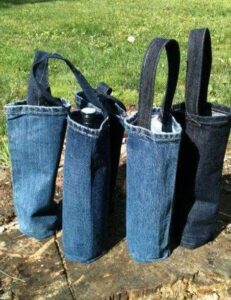
Materials, Measurements, and Preparing Your Denim
Begin your Denim bottle holder pattern by selecting a pair of jeans that still has strong fabric. Areas around the lower legs are often useful because they provide relatively large sections without pockets or complicated seams. Medium-weight denim is particularly convenient because it provides structure while remaining manageable on a domestic sewing machine. Very heavy denim can also work, but multiple layers may require slower stitching and careful seam preparation.
For the main holder, you will need denim, coordinating cotton fabric for the optional lining, polyester all-purpose thread, a denim or jeans needle, fabric scissors or a rotary cutter, measuring tape, ruler, pins or sewing clips, and an iron. You may also want cotton webbing if you prefer a ready-made strap rather than constructing one from denim. A 90/14 or 100/16 denim needle is commonly suitable, depending on the thickness of your materials.
The most reliable way to determine the size is to measure your actual bottle. Measure around the widest part to determine its circumference, and then measure from the bottom to the desired height of the holder. For example, imagine a bottle measuring approximately 10 inches around and 9 inches tall. Add approximately 1 inch to the circumference measurement for seam allowance and a little ease, giving you an 11-inch-wide body piece.
For height, add approximately 1 to 1½ inches to accommodate the bottom seam and top finishing. Using the example above, you might cut a denim rectangle approximately 11 inches wide by 10½ inches tall. These measurements are only an example rather than a universal template. The advantage of a handmade Denim bottle holder pattern is that you can customize the dimensions precisely for the bottle you use most often.
If you are adding a lining, cut a cotton rectangle using approximately the same dimensions as the denim body. A lining covers internal seams, creates a cleaner finish, and can add personality through contrasting prints. For additional stability, lightweight or medium-weight interfacing can be applied to the lining or outer fabric. However, sturdy denim may already provide enough structure without interfacing.
Before cutting, wash, dry, and press recycled jeans whenever possible. Washing removes dirt and helps minimize unexpected shrinkage later. Examine the denim for weakened areas, particularly around knees and worn seams. Minor fading can add character, but severely weakened fabric should not be positioned around the bottom or strap attachment points because those areas need strength.
Cutting and Sewing the Main Denim Bottle Holder Pattern
Once the fabric is prepared, cut the rectangular outer body according to your bottle measurements. Try to position any attractive fading or original topstitching intentionally. If the jeans include a small pocket that fits the design, you can carefully remove it with a seam ripper and reuse it on the outside of the holder. This creates convenient storage for a small note, key, or other lightweight item.
Fold the denim body rectangle in half with right sides facing so that the short edges meet. Pin or clip the side edge and sew it using approximately a ½-inch seam allowance. Backstitch at the beginning and end. Press the seam open when possible. If the denim frays heavily, finish the raw edges with a zigzag stitch or another suitable seam-finishing method.
Now test the denim tube around the bottle before adding the base. The bottle should slide inside without excessive force, but the holder should not be so loose that the bottle moves around dramatically. This fitting step is extremely helpful because small differences in denim thickness and seam allowance can change the finished circumference. If necessary, adjust the side seam before continuing.
For a circular base, measure the finished diameter of the denim tube. You can also determine an approximate diameter by dividing the bottle circumference by 3.14 and then adding seam allowance around the resulting circle. Cut one circle from denim and, if using a lining, another matching circle from lining fabric. Mark quarter points around both the tube opening and circular base to make alignment easier.
With right sides together, match the quarter marks and clip the denim circle around the bottom opening. Use plenty of clips so the fabric is distributed evenly. Sew slowly around the circle with approximately a ⅜- to ½-inch seam allowance. A shorter stitch length can provide control around the curve, but avoid extremely tiny stitches because they can be difficult to remove if adjustments are needed.
After sewing, trim excess bulk and carefully clip the seam allowance around the curve without cutting through the stitching. Turn the outer Denim bottle holder right side out and insert the bottle for another fitting check. The base should sit relatively flat, and the bottle should remain upright when the holder is placed on a level surface. Small irregularities can usually be improved with pressing and careful shaping.
Adding the Lining, Strap, and Professional Finishing Details
To create the lining for your Denim bottle holder pattern, fold the lining rectangle with right sides together and sew the side seam using the same seam allowance as the outer holder. Attach the lining base in the same manner as the denim base. Leave a small opening in an appropriate lining seam if you plan to use a bagging method that requires turning the project through the lining.
Place the lining inside the denim holder and check that the side seams align. Depending on your chosen construction method, the top edges can be folded toward the wrong sides and topstitched together, or the outer layer and lining can be sewn right sides together and turned. A simple folded top edge is particularly approachable for beginners. Pressing carefully before stitching will help the opening look neat and even.
Next, prepare the carrying strap. For a short hand strap, a finished length of approximately 8 to 12 inches may be sufficient. For a shoulder or crossbody-style carrier, measure from the desired carrying position before cutting. Individual body proportions and preferences vary, so measuring is better than relying on a fixed strap length. Remember to include extra length for securely attaching each end.
To make a denim strap, cut a long strip approximately 3 inches wide. Fold the long edges toward the center, press them carefully, and then fold the entire strip in half lengthwise. The raw edges should now be enclosed. Stitch close to both long edges to create a strong, neat strap. If the denim is extremely thick, cotton webbing can be an easier alternative and can reduce bulk at the attachment points.
Position each strap end on opposite sides of the holder near the top opening. Insert approximately 1 to 1½ inches of each end against the body and secure with clips. Stitch a rectangle with a diagonal cross through each attachment area, commonly called box-X stitching. This distributes stress across a larger area and provides much greater security than a single straight row of stitching.
Finish the upper edge with one or two rows of visible topstitching. Traditional golden-brown thread creates a classic jeans-inspired appearance, while matching navy thread produces a subtler finish. Before considering the Denim bottle holder pattern complete, inspect every seam, remove loose threads, press the project carefully, and gently test the strap attachment without overloading it.
Customization Ideas, Denim Sewing Tips, and Common Problems
One of the most enjoyable aspects of the Denim bottle holder pattern is personalization. Different denim washes create completely different styles. Dark indigo produces a polished appearance, faded blue creates a relaxed vintage effect, and black or gray denim gives the project a modern look. You can even combine several shades into a patchwork outer panel before constructing the holder.
Original jean pockets are excellent decorative features. Remove a back pocket carefully and stitch it onto the holder before sewing the main body seam. Keep the original golden topstitching visible whenever possible. A pocket immediately communicates the upcycled origin of the project while providing additional functionality. Just make sure its placement does not interfere with the side seam or strap attachment.
For a more decorative version, add simple embroidery, fabric appliqué, quilted lines, or contrasting fabric panels. Floral cotton lining looks beautiful against classic blue denim, while gingham or geometric prints can create a playful finish. When adding embellishments, attach them before assembling the cylindrical body whenever possible because sewing on a flat fabric panel is considerably easier.
If your sewing machine struggles with thick denim seams, do not force the fabric through quickly. Install a fresh denim needle and sew slowly over bulky intersections. A leveling tool can help the presser foot remain horizontal when moving over a thick seam. You can also trim unnecessary seam allowance from concealed areas to reduce the number of fabric layers under the needle.
If the completed holder feels too loose, reduce the body circumference slightly at the side seam. If it is too tight, unfortunately there may not be enough fabric to enlarge it significantly, which is why test-fitting before attaching the bottom is important. When calculating the initial Denim bottle holder pattern, remember that the bottle needs a little ease so it can slide in and out comfortably.
You can also adapt the basic project into several variations. Make a shorter version that exposes the upper portion of the bottle, create an adjustable strap using appropriate bag hardware, add an exterior pocket, quilt the denim to a lightweight batting layer, or create a drawstring-style upper section. Once you understand the basic cylindrical construction, the design becomes an excellent foundation for experimenting with recycled denim.
FAQ About the Denim Bottle Holder Pattern
Is the Denim bottle holder pattern suitable for beginners?
Yes. The project mainly uses straight stitching, although attaching a circular bottom requires some patience. Beginners can improve accuracy by marking quarter points and using several sewing clips around the curve.
What type of denim should I use?
Medium-weight non-stretch denim is generally the easiest option. It provides durability and structure without creating excessive bulk. Recycled jeans work especially well as long as the fabric is still strong.
Can I use stretch denim?
You can, but stable denim is easier to control. If using stretch denim, consider adding interfacing to reduce distortion and help the holder maintain its shape.
How do I measure a bottle for the pattern?
Measure around the widest part of the bottle and measure its height. Add seam allowance and a small amount of ease to the circumference. Add extra height for the bottom seam and upper finishing.
What seam allowance should I use?
Approximately ⅜ to ½ inch works well for many versions. The important thing is to choose a seam allowance and use it consistently throughout matching pieces.
Does the bottle holder need a lining?
No, but lining provides a cleaner interior and hides raw seams. It also gives you an opportunity to add contrasting fabric and can provide extra stability.
Can I add insulation to the holder?
A suitable insulating layer can be incorporated between the outer denim and lining when the holder is intended as an insulated carrier. Follow the care and usage recommendations associated with the specific material you select, particularly regarding heat and moisture.
How long should the strap be?
That depends on how you plan to carry the holder. A hand strap can be relatively short, while shoulder and crossbody straps require considerably more length. Measure the desired drop on the intended user before cutting.
How can I prevent denim from fraying?
Finish exposed seam allowances with a zigzag stitch, overcast stitch, or another appropriate seam finish. A lining can also conceal many raw edges.
Why does my circular bottom look puckered?
Puckering usually happens when the circular base is not distributed evenly around the tube. Mark both pieces into quarters or eighths, match those points, and gradually ease the fabric between them without stretching.
Can I make the Denim bottle holder pattern without a circular base?
Yes. Another approach is constructing a rectangular body and creating boxed corners at the bottom. This results in a slightly different silhouette but avoids sewing a tight circular seam.
Can I reuse the original seams from old jeans?
Absolutely. Original seams can become attractive design features. Position them intentionally when cutting, but remember that very thick intersections may be challenging for some sewing machines.
What needle is best for sewing denim?
A dedicated denim or jeans needle is recommended. The appropriate size depends on fabric thickness, with sizes such as 90/14 or 100/16 commonly used for medium to heavier denim.
What thread should I use?
Quality polyester all-purpose thread works for general construction. Decorative topstitching can be completed with a heavier topstitching thread if your sewing machine and needle combination can accommodate it.
Can I make this project using denim scraps?
Yes. Join scraps into a patchwork panel large enough for the outer body and then cut your pattern piece from that panel. This is an excellent way to use smaller pieces left from previous projects.
How can I make the strap stronger?
Use sturdy denim or webbing and reinforce both attachment points with multiple rows of stitching or box-X construction. Check the seams periodically if the holder is used frequently.
Can I add a pocket to the bottle holder?
Yes. A recycled jeans pocket is particularly convenient. Attach it to the outer denim while the body piece is still flat, before sewing the side seam.
How do I wash a handmade denim bottle holder?
Care requirements depend on every material used in the project. If the holder contains only washable denim, cotton lining, and compatible thread, gentle washing is usually appropriate. Prewashing fabrics before construction helps reduce unexpected shrinkage.
Conclusion
The Denim bottle holder pattern is a practical way to combine sewing, creativity, and denim upcycling in one manageable project. Starting with an old pair of jeans, you can create a durable carrier designed specifically around the measurements of your favorite reusable bottle.Throughout this tutorial, you learned how to measure the bottle accurately, calculate the dimensions of the main denim panel, prepare and cut recycled fabric, sew the cylindrical body, construct a circular base, add an optional lining, create a strong denim strap, and reinforce the most important stress points. You also learned why careful pressing, consistent seam allowances, test-fitting, and appropriate denim needles can significantly improve the finished result.
The pattern can be personalized with recycled jeans pockets, contrasting topstitching, patchwork denim, colorful lining, embroidery, appliqués, or different strap styles. Once you understand the basic construction, adjusting the dimensions for different bottles becomes straightforward, allowing you to make personalized versions for yourself or as thoughtful handmade gifts.
If you make this Denim bottle holder pattern, please leave your sincere opinion about the project and share your suggestions. Tell us which denim wash, lining fabric, strap style, or decorative details you would choose, and share any creative modifications that could make the design even more useful. Your ideas can inspire other sewing enthusiasts to give their old denim a practical and beautiful new purpose.