
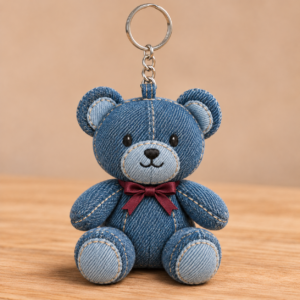
The Pattern for a Denim Teddy Bear Keychain is a charming sewing project that transforms old denim fabric into a cute, practical, and personalized accessory.
One of the most appealing features of a denim teddy bear keychain is that every finished piece can look slightly different.
In this tutorial, you will learn how to create a miniature teddy bear using a simple fabric template, denim pieces, soft stuffing, and a keychain attachment. The instructions explain how to prepare the pattern, cut the fabric, sew the bear, turn and fill the shape, and add the finishing details. This Pattern for a Denim Teddy Bear Keychain is designed as an adaptable project, so you can adjust the size, facial expression, and decorations according to your preferences. With patience and a little creativity, you can turn a small piece of recycled denim into an adorable handmade accessory.
Materials and Preparation for Your Denim Teddy Bear Keychain
Before starting your Pattern for a Denim Teddy Bear Keychain, gather the necessary materials. You will need a small amount of denim fabric, preferably from an old pair of jeans, along with polyester fiberfill for stuffing. Choose denim that is clean and in good condition. Medium-weight denim is generally easier to handle than very thick or heavily reinforced material, especially when sewing the small curves of a teddy bear.
You will also need a paper template, fabric scissors, pins or sewing clips, a ruler, tailor’s chalk or a washable fabric marker, and matching sewing thread. A sewing machine can make the process quicker, but hand sewing is also possible. If you are using a machine, select a suitable needle for denim and test the stitch on a scrap piece before beginning. This helps you check whether the needle and thread work well with your chosen fabric.
For the keychain attachment, prepare a small metal key ring, a short chain, or a ready-made keychain connector. You may also use a small fabric loop reinforced with stitching to connect the bear to the metal hardware. Make sure the attachment is appropriate for the finished size and weight of your teddy bear. A secure connection is important because the keychain will be handled frequently.
To create the teddy bear template, draw a simple front-facing bear silhouette on paper. Include a rounded head, two small ears, a slightly wider body, and short arms and legs. For a beginner-friendly design, keep the outline simple and avoid extremely narrow sections. You can draw the entire bear as one continuous silhouette or create separate pieces for the head, body, arms, and legs. A single-piece front and back design is usually easier for a small keychain.
Decide how large you want your finished teddy bear to be. A height of approximately 3 to 4 inches is a convenient starting point for a keychain, although you can make it smaller or larger. Remember that the final size will be slightly reduced by the seam allowance. Draw the template with enough room around the edges for sewing, and check that the two sides of the bear will align when placed together.
Before cutting the denim, wash and dry recycled fabric if necessary, then press it gently to remove wrinkles. Place the template on the fabric and trace two matching bear shapes. If the denim has a visible direction or a decorative area you want to feature, position the template carefully. Cut slowly and check that both pieces have the same outline. Accurate preparation makes the sewing and assembly stages much easier.
Step-by-Step Instructions for Sewing the Denim Teddy Bear
Place the two denim bear shapes together with their right sides facing inward. Align the ears, head, arms, body, and legs carefully. Secure the pieces with pins or clips, keeping them away from the stitching line. If you are using a separate head and body design, assemble those sections according to your chosen template before joining the front and back pieces.
Begin sewing around the outline, leaving a small opening along one side or near the lower body. This opening will be used to turn the bear right side out and add the stuffing. Use a seam allowance of approximately 1/4 inch, adjusting it according to the size of your template. Sew slowly around the ears and narrow areas between the arms and body because these sections require extra attention.
If you are sewing by hand, use small, firm backstitches to help keep the seams secure. Denim can be thicker than ordinary cotton, so avoid pulling the thread too tightly. If you are using a sewing machine, make sure the layers feed evenly and do not force the fabric through thick areas. A consistent seam will help the teddy bear maintain its shape after stuffing.
After sewing, trim away excess fabric around the outside of the shape, leaving the seam allowance intact. Carefully make small clips in the seam allowance around inward curves, such as the areas near the arms and legs. Be particularly careful not to cut through the stitching. These small cuts help the fabric spread more naturally when the bear is turned right side out.
Turn the teddy bear through the opening using your fingers or a blunt turning tool. Gently push out the ears, arms, legs, and rounded head. Because denim is relatively firm, take your time with the smaller sections. Avoid using sharp scissors or pointed objects to force the corners outward, as these can damage the seams or puncture the fabric.
Fill the bear with small amounts of polyester fiberfill, starting with the ears, arms, and legs before filling the body and head. Use your fingers or a blunt tool to distribute the stuffing evenly. Do not overfill the bear, because excessive stuffing can make the seams stretch and distort the silhouette. When the shape looks balanced and softly rounded, fold the raw edges of the opening inward and close it with a neat ladder stitch or another secure hand-sewing method.
Adding Teddy Bear Details and Attaching the Keychain Hardware
Now that the basic shape is complete, it is time to give your denim teddy bear keychain its personality. Start by deciding where the eyes, nose, and mouth should be placed. You can use embroidery thread to create simple facial features. Small stitched eyes and a triangular or rounded nose are classic choices that give the bear a friendly appearance without requiring complicated materials.
For a soft and simple design, embroider the eyes with dark thread and create the nose using a few neat stitches. You can also use a small piece of felt for the muzzle, attaching it securely with hand stitching. If the keychain will be used by a young child, avoid small detachable pieces that could present a choking hazard. Embroidered details are generally a practical alternative to loose plastic decorations.
Consider adding a little bow, ribbon, or fabric scarf around the teddy bear’s neck. A narrow strip of cotton fabric can be folded and tied into a small bow, while a short piece of ribbon can create a neat decorative collar. Choose colors that contrast with the denim, such as red, cream, yellow, or white. These small accents can make the bear look more festive or coordinate with a particular bag or accessory.
You can also personalize the denim surface with decorative stitching. A small heart embroidered on the belly, a simple initial, or a few contrasting stitches can make the keychain feel more personal. If you want a rustic style, use visible topstitching around selected areas. Keep the details proportionate to the miniature size of the bear so that the design remains balanced and easy to recognize.
To attach the keychain hardware, create a small fabric loop using a narrow strip of denim or sturdy cotton. Fold the strip lengthwise, stitch along the edge, and turn or fold it neatly. Insert the loop through the top of the bear, near the center of the head, before closing the opening if your construction method allows it. Alternatively, sew the loop securely to the finished bear using several reinforced stitches. Attach the metal ring or chain to the loop after checking that it is firmly connected.
Finally, inspect the entire teddy bear carefully. Check the seams, facial embroidery, decorative elements, and keychain connection. Gently pull the attachment to confirm that it feels secure, without applying excessive force that could damage the fabric. Remove loose threads and reshape the stuffing if necessary. A careful final inspection helps ensure that your handmade accessory is attractive, comfortable to handle, and ready for everyday use.
Creative Variations, Care Tips, and Finishing Ideas
One of the advantages of this Pattern for a Denim Teddy Bear Keychain is how easily it can be customized. Different denim washes create different moods, from a classic dark-blue bear to a soft, faded design. You can also combine denim with cotton fabric for the ears, paws, or belly. Small printed fabrics featuring flowers, stars, or other cheerful patterns create an attractive contrast with the denim texture.
If you enjoy recycling materials, consider using different parts of old jeans. A back pocket can provide a small decorative panel for the bear’s belly, while contrasting seams can be incorporated into a scarf or other accessory. Make sure the fabric is clean and that any thick seams, rivets, or hard components are removed before cutting. Avoid placing bulky sections where they could make the bear uncomfortable to handle or difficult to sew.
For a more colorful design, use embroidery floss to add small decorative patterns. You could stitch tiny flowers, stars, initials, or simple geometric shapes onto the body. Another option is to create a small heart from felt or cotton and attach it to the bear’s front. These details make the project suitable for personalized gifts, handmade collections, or small craft-market accessories.
You can also experiment with the bear’s proportions. A round head and short body create a classic teddy bear appearance, while longer arms and legs give the figure a playful style. If you want to make several keychains, create one paper template and use it for each project. This keeps the basic dimensions consistent while allowing you to change the fabrics, expressions, and decorations.
To care for your finished keychain, avoid exposing it to unnecessary moisture, dirt, or rough handling. If the denim becomes dirty, gently spot-clean the surface with a damp cloth and mild soap, testing a hidden area first. Do not soak the entire bear if the stuffing or metal hardware may be affected. Allow it to air-dry completely before using it again, and avoid placing it in a dryer.
Your finished denim teddy bear keychain can be used in many creative ways. Attach it to a backpack, handbag, zipper pull, or set of keys. It can also become a thoughtful handmade gift for someone who appreciates sewing, recycling, and small fabric accessories. Making several bears in different denim shades is a lovely way to use leftover materials while creating a coordinated collection of unique handmade pieces.
Frequently Asked Questions About the Pattern for a Denim Teddy Bear Keychain
1. Is this denim teddy bear keychain suitable for beginners?
Yes. The project is suitable for beginners who have basic sewing skills. The most important techniques are tracing a template, cutting two matching fabric pieces, sewing around an outline, turning the shape, stuffing it, and closing the opening. Starting with a simple silhouette makes the process easier.
2. Can I make a teddy bear keychain from old jeans?
Absolutely. Recycled jeans are an excellent material for this project. Choose clean denim without excessive wear or damage. Remove bulky seams, rivets, and other hard details before cutting the fabric. This gives you a smoother surface that is easier to sew.
3. What is the best size for a denim teddy bear keychain?
A finished height of approximately 3 to 4 inches is a practical starting point. This size is small enough to attach to keys or bags while still providing enough space for facial details. You can adjust the template to create larger or smaller versions.
4. Can I sew the teddy bear by hand?
Yes. Hand sewing is possible, especially because the project is small. Use a strong thread and small, even backstitches around the outline. If the denim is thick, a suitable hand-sewing needle can make the work more comfortable.
5. What type of stuffing should I use?
Polyester fiberfill is a common choice because it is lightweight, soft, and easy to distribute inside small fabric projects. Add it gradually to avoid overfilling the bear. Small amounts placed carefully into the ears, arms, and legs help create a more even shape.
6. How do I make the keychain attachment strong?
Use a sturdy fabric loop or suitable keychain connector and reinforce the attachment with several secure stitches. The loop should be positioned near the top center of the bear. Check the connection before regular use, especially if the keychain will be attached to objects that are frequently handled.
7. How can I decorate my denim teddy bear?
You can add embroidered eyes, a stitched nose, a fabric muzzle, a small bow, a scarf, or decorative stitching. Felt details and contrasting cotton fabric can also create attractive accents. Choose decorations that are securely attached and suitable for the intended use.
8. Can I sell teddy bear keychains made with this pattern?
You can use your sewing skills to create handmade accessories for personal projects or small craft businesses. If you plan to sell them, make sure your design, materials, and product descriptions are accurate. Check any applicable local requirements for handmade products, particularly if the items may be used by children.
Conclusion
The Pattern for a Denim Teddy Bear Keychain is a lovely way to transform leftover jeans into a useful and adorable handmade accessory. By preparing a simple teddy bear template, cutting two matching denim pieces, sewing the outline, turning and stuffing the shape, and adding embroidered facial details, you can create a miniature bear with its own personality. A reinforced fabric loop and secure keychain hardware complete the project, making it ready to decorate keys, bags, or backpacks.
The best part of this project is the freedom to personalize every detail. You can experiment with different denim shades, colorful ribbons, embroidered designs, felt accents, and contrasting fabrics to create a collection of unique teddy bears. It is also a practical opportunity to reuse materials and develop your sewing skills through a small, enjoyable project.
If you try this tutorial, leave your sincere opinion in the comments and share your suggestions. Which denim colors and decorations would you choose for your teddy bear? Your ideas and experiences may inspire other readers to create their own beautiful handmade keychains!