
Acorn fabric coaster pattern is a delightful sewing project that combines creativity, practicality, and seasonal charm into one beautiful handmade accessory.
One of the greatest advantages of making an Acorn fabric coaster pattern is that it is suitable for sewists of all experience levels.
Another reason this project has become increasingly popular is its versatility. Although inspired by the classic acorn shape associated with fall décor, these coasters can easily be customized to suit every season. Different fabric colors, quilting designs, stitching styles, and decorative accents allow each finished coaster to have its own unique personality. Whether you prefer rustic farmhouse décor, modern minimalist designs, or colorful patchwork styles, the Acorn fabric coaster pattern can be adapted to match your personal taste while remaining both durable and practical for everyday use.
Choosing Materials and Preparing Your Fabric
Before beginning your Acorn fabric coaster pattern, gather all the necessary supplies to ensure a smooth sewing experience. Preparation saves time and helps achieve accurate results throughout the project.
For the main body of the acorn, choose high-quality cotton quilting fabric. Brown, beige, mustard, rust, cream, olive, and soft orange are popular choices that beautifully capture the natural appearance of an acorn while complementing seasonal home décor.
Select a coordinating fabric for the acorn cap. Textured prints, small florals, gingham, plaid, or tiny geometric patterns work especially well because they add visual contrast while maintaining a cohesive overall design.
To provide stability and heat resistance, prepare one layer of cotton batting or insulated batting. This extra layer helps the coaster maintain its shape while protecting tabletops from warm mugs and cups.
Basic sewing supplies include sharp fabric scissors or a rotary cutter, quilting ruler, sewing clips or pins, coordinating thread, sewing machine, iron, ironing board, washable fabric marker, and a printed or hand-drawn acorn template.
Before cutting any pieces, wash, dry, and press your fabrics. Prewashing removes excess shrinkage and ensures the finished Acorn fabric coaster pattern maintains its shape even after future cleaning.
Cutting the Pieces and Sewing the Acorn Shape
Begin by tracing your acorn template onto the wrong side of the fabric. A finished coaster measuring approximately 5 to 6 inches tall provides excellent protection for mugs, teacups, glasses, and small bowls.
Cut two acorn body pieces from your chosen fabric. Cut one matching piece of batting using the same template. For the acorn cap, cut one coordinating fabric piece that overlaps the top section of the body by approximately one inch.
Place the batting between the front and back fabric layers. Position the cap fabric on top of the front body piece according to your template. Press everything carefully so the layers remain flat during sewing.
Pin or clip all layers securely before stitching. If desired, quilt the front panel first using simple straight lines, diagonal stitching, or gentle echo quilting to add texture and improve durability.
Using a sewing machine, stitch around the entire perimeter with approximately a ¼-inch seam allowance. Leave a small opening along one side so the coaster can be turned right side out after sewing.
Trim the seam allowance slightly, especially around curved edges, and carefully clip the curves without cutting through the stitching. Turn the coaster right side out, gently push the curves into shape using a blunt turning tool, and press thoroughly with an iron. Topstitch close to the edge all the way around to close the opening and give the Acorn fabric coaster pattern a polished professional finish.
Adding Decorative Details and Personal Touches
Once the basic coaster is complete, you can personalize your Acorn fabric coaster pattern with decorative stitching that highlights the natural shape of the acorn.
Simple quilting lines across the cap create realistic texture while also securing the fabric layers together. Horizontal, diagonal, or crosshatch stitching all work beautifully depending on your preferred style.
Machine embroidery or hand embroidery can be added before final assembly. Tiny leaves, oak branches, initials, or delicate vines give every coaster an elegant handcrafted appearance.
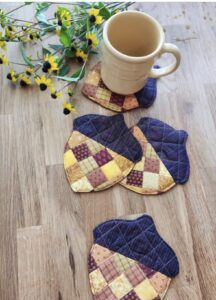
Fabric scraps from coordinating collections can be combined to create patchwork acorn bodies. This technique is an excellent way to use leftover quilting fabric while producing completely unique coasters.
Decorative topstitching using contrasting thread adds another attractive detail. Neutral thread creates a subtle finish, while gold, copper, or dark brown thread emphasizes the acorn silhouette.
To create matching table décor, sew several coasters using the same fabrics. Coordinated sets make wonderful gifts for birthdays, holidays, housewarming celebrations, teachers, neighbors, or anyone who appreciates handmade home accessories.
Tips for Professional Results and Long-Lasting Coasters
Accurate cutting is one of the most important steps when making an Acorn fabric coaster pattern. Carefully cut every fabric layer so all pieces align perfectly during assembly.
Always press your seams instead of skipping the ironing stage. Pressing creates crisp edges, smooth curves, and significantly improves the finished appearance of handmade sewing projects.
Use cotton thread that closely matches your chosen fabrics. High-quality thread produces stronger seams and helps the coaster withstand regular daily use.
If your coaster shifts while sewing, reduce your machine speed and guide the fabric gently instead of pulling it. This helps maintain smooth curves and even seam allowances.
Test your stitch length on fabric scraps before beginning the final project. A medium stitch length usually provides an attractive balance between strength and flexibility for decorative coasters.
As your confidence grows, experiment with larger acorn placemats, mug rugs, table runners, wall décor, or seasonal centerpieces using the same construction techniques. Mastering the Acorn fabric coaster pattern opens the door to many additional sewing projects inspired by nature.
Frequently Asked Questions
Is the Acorn fabric coaster pattern suitable for beginners?
Yes. This project is beginner-friendly and introduces several useful sewing skills including fabric cutting, curved stitching, layering batting, turning corners, pressing seams, and topstitching.
Which fabric works best?
Cotton quilting fabric is the most popular choice because it is easy to sew, durable, washable, and available in countless beautiful colors and prints.
Do I need batting inside the coaster?
Yes. Batting helps the coaster maintain its shape while providing additional protection from warm cups and reducing moisture transfer.
Can I wash the finished coaster?
Absolutely. If high-quality cotton fabric, batting, and thread are used, the coaster can generally be machine washed on a gentle cycle and laid flat to dry.
How long does it take to make one coaster?
Most sewists can complete one Acorn fabric coaster pattern in approximately 30 to 60 minutes, depending on the amount of quilting and decorative details included.
Can I make matching sets?
Yes. Coordinated coaster sets are one of the most popular uses for this project and make thoughtful handmade gifts for family and friends.
What size should the finished coaster be?
A finished size of approximately 5 to 6 inches works well for most mugs, cups, and glasses while showcasing the decorative acorn shape.
Can I customize the design?
Certainly. You can experiment with different fabric collections, quilting patterns, embroidery, decorative stitching, seasonal colors, and patchwork techniques to create a unique version of the Acorn fabric coaster pattern.
Conclusion
The Acorn fabric coaster pattern is a rewarding sewing project that combines functionality, creativity, and timeless seasonal style into a beautiful handmade accessory.
Throughout this guide, you learned how to choose appropriate materials, prepare and cut your fabric, assemble the layered pieces, sew smooth curved edges, turn and finish the coaster, and add decorative quilting and personalized details that enhance its appearance. Because the project is simple, affordable, and highly customizable, it is an excellent choice for beginners looking to build confidence as well as experienced sewists searching for a relaxing project that uses fabric scraps efficiently.
With practice, you can easily create coordinated coaster sets, thoughtful handmade gifts, or charming additions to your own home décor. I hope this tutorial has inspired you to start your own Acorn fabric coaster pattern today. If you enjoyed this guide, please leave your honest opinion, share your sewing experience, and feel free to suggest new projects or patterns you would like to learn in future tutorials.