
Drawstring denim bag pattern is one of the most popular sewing projects for beginners and experienced crafters who want to create a practical, reusable, and fashionable accessory.
Denim has remained one of the most trusted fabrics in the fashion industry because of its strength, versatility, and timeless appearance.
One of the greatest advantages of using a drawstring denim bag pattern is the opportunity to personalize every detail. From selecting different denim shades to adding decorative stitching, embroidery, pockets, or colorful drawstrings, every project becomes unique. As your sewing confidence grows, you can experiment with different sizes, shapes, and finishing techniques while creating bags that perfectly suit your needs and personal style.
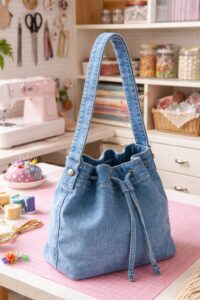
Why Choose a Drawstring Denim Bag Pattern
A drawstring denim bag pattern offers an ideal balance between simplicity and functionality. Unlike complex handbag patterns that require multiple hardware components, a drawstring design mainly relies on fabric construction and a simple cord closure. This makes the project accessible for beginners while still providing enough creative possibilities for experienced sewists.
Denim is known for its exceptional durability. Even lightweight denim fabrics provide excellent strength, allowing the finished bag to carry daily essentials without losing its shape. Choosing quality denim helps extend the lifespan of the project while maintaining a stylish appearance through regular use.
Another benefit of using a drawstring denim bag pattern is its versatility. The same basic pattern can be adapted into a small pouch, a medium-sized everyday bag, or a large storage sack. Minor adjustments to the measurements allow the pattern to serve multiple purposes without requiring advanced sewing techniques.
Customization is another major advantage. Decorative stitching, contrasting fabrics, appliqués, embroidered initials, lace accents, or recycled denim patches can all transform a basic project into a one-of-a-kind handmade accessory. This flexibility encourages creativity while allowing every maker to develop a distinctive style.
Many people also appreciate that denim ages beautifully. As the fabric softens over time, it develops character while maintaining its structural integrity. This natural aging process gives every handmade bag a unique personality that cannot be replicated by mass-produced products.
Finally, a drawstring denim bag pattern supports sustainable crafting. Repurposing old jeans into functional bags reduces textile waste and gives worn clothing a completely new purpose. This environmentally conscious approach continues to grow in popularity among sewing enthusiasts worldwide.
Essential Materials and Preparation
Before starting your drawstring denim bag pattern, gathering the appropriate materials helps ensure a smooth sewing experience. Selecting quality supplies contributes significantly to the final appearance and durability of the finished bag.
The most important material is denim fabric. Medium-weight denim generally offers the ideal balance between flexibility and strength. Recycled jeans can also provide excellent fabric, especially when the goal is to create sustainable handmade products.
A durable lining fabric improves both appearance and functionality. Cotton lining protects the inside of the bag, hides seam allowances, and provides additional stability while making the bag easier to clean and maintain.
Strong thread is equally important. Polyester thread is commonly recommended because it withstands repeated use while maintaining secure seams. Matching or contrasting thread colors can both produce attractive visual effects depending on the desired design.
The drawstring itself may consist of cotton cord, braided rope, leather cord, or woven ribbon. Choosing a comfortable and durable material ensures smooth opening and closing while complementing the overall appearance of the finished project.
Basic sewing tools include fabric scissors, measuring tape, pins or clips, sewing needles suitable for denim, chalk or washable fabric markers, and an iron for pressing seams during construction. Careful preparation helps improve sewing accuracy while producing cleaner, more professional results.
Planning each step before cutting fabric minimizes mistakes and reduces wasted materials. Taking accurate measurements and following the chosen drawstring denim bag pattern carefully creates a more polished final product while building confidence throughout the sewing process.
Sewing Techniques That Improve Your Results
Success with a drawstring denim bag pattern depends not only on the pattern itself but also on proper sewing techniques. Even simple adjustments can significantly improve the durability and appearance of the completed bag.
Accurate cutting is the foundation of every successful sewing project. Clean, straight fabric edges help ensure that all pieces align correctly during assembly, reducing unnecessary adjustments later in the process.
Pressing seams after every major sewing step creates crisp edges and improves overall construction. Although often overlooked by beginners, regular pressing produces noticeably more professional-looking results and makes later assembly much easier.
Reinforcing stress points is especially important in drawstring bags. Areas around the drawstring casing, bottom corners, and side seams experience repeated tension during everyday use. Double stitching or backstitching these sections improves long-term durability.
Topstitching serves both decorative and practical purposes. Visible rows of stitching strengthen seams while adding the classic appearance commonly associated with denim products. Neat topstitching enhances the overall craftsmanship of the finished bag.
Testing the drawstring channel before completing the final seams helps ensure that the cord slides smoothly without catching. Small adjustments at this stage prevent frustration after the project is finished.
Taking time rather than rushing each step consistently produces better results. Careful attention to measurements, stitching accuracy, and finishing details transforms a simple drawstring denim bag pattern into a beautiful handmade accessory suitable for daily use or thoughtful gift giving.
Creative Ideas and Long-Term Care
Once you become comfortable with a drawstring denim bag pattern, countless creative opportunities become available. Small design changes allow every bag to reflect individual personality while expanding your sewing experience.
Mixing different denim shades creates attractive patchwork designs that showcase recycled materials in a modern and artistic way. Combining light, medium, and dark denim introduces visual depth without requiring complicated construction methods.
Adding functional exterior or interior pockets increases convenience. Separate compartments for phones, keys, notebooks, or small accessories make the finished bag even more practical for everyday use.
Personalized embroidery offers another excellent way to customize the project. Initials, floral designs, geometric patterns, or inspirational words can transform a simple handmade bag into a meaningful keepsake or personalized gift.
Decorative hardware such as metal eyelets, leather labels, or fabric tags may also enhance the finished appearance while reinforcing frequently used areas around the drawstring opening. These small additions contribute to a more refined overall design.
Proper maintenance extends the lifespan of every handmade denim bag. Washing gently in cold water, avoiding harsh chemicals, and allowing the bag to air dry helps preserve both the fabric and decorative elements while minimizing shrinkage.
As sewing skills improve, experimenting with larger bags, reversible designs, quilted panels, contrast linings, and more advanced pocket arrangements allows makers to continually expand their creativity while mastering increasingly sophisticated drawstring denim bag pattern projects.
Frequently Asked Questions
What is a drawstring denim bag pattern?
A drawstring denim bag pattern is a sewing template that provides measurements and construction instructions for making a denim bag with a drawstring closure.
Is a denim drawstring bag suitable for beginners?
Yes. Many basic drawstring denim bag pattern designs are beginner-friendly and require only fundamental sewing skills while providing excellent practice for improving accuracy.
Can I recycle old jeans for this project?
Absolutely. Repurposing old jeans is one of the most popular ways to create a durable and sustainable drawstring denim bag while reducing fabric waste.
What type of denim works best?
Medium-weight denim is often recommended because it provides durability without becoming overly difficult to sew. However, lightweight and heavyweight denim can also be used depending on the desired result.
How can I make my bag more durable?
Using strong polyester thread, reinforcing high-stress seams, pressing each seam carefully, and selecting quality materials all contribute to a longer-lasting finished bag.
Can I sell bags made from my own version of a drawstring denim bag pattern?
Yes, provided you create original designs or follow the licensing terms of any commercial pattern you use. Always respect applicable copyright and intellectual property rules when selling handmade products.
Conclusion
A drawstring denim bag pattern is an excellent project for anyone interested in combining creativity, sustainability, and practical sewing skills.
Throughout this guide, you have learned the advantages of working with denim, how to select appropriate materials, techniques that improve sewing quality, creative customization ideas, and maintenance practices that help handmade bags last for years.
Whether your goal is to create a simple everyday accessory, develop your sewing abilities, or produce unique handmade gifts, this versatile project offers endless opportunities for learning and personal expression. If you found this guide helpful, please leave your honest opinion and share your suggestions. Your feedback can help improve future sewing guides and inspire even more creative projects.