
Fabric bag pattern with ruffles is a charming sewing project that combines practicality, creativity, and a touch of feminine elegance. A handmade fabric bag with decorative ruffles is a wonderful accessory for everyday use, shopping trips, craft activities, or special occasions. Its beautiful details make it stand out from ordinary fabric bags, while its simple construction makes it an enjoyable project for sewing enthusiasts of different skill levels.
One of the best things about this fabric bag pattern with ruffles is that it allows you to transform ordinary pieces of fabric into something unique and useful. You can choose floral prints, delicate cotton fabrics, colorful patterns, or even combine different materials to create an accessory that reflects your personal style. The ruffles add movement, texture, and volume, giving the finished bag a lovely handmade appearance.
Whether you are an experienced sewer or just beginning to explore fabric crafts, this project offers an excellent opportunity to practice essential sewing techniques. You will learn how to measure and cut fabric, prepare decorative ruffles, assemble the main bag body, create sturdy handles, and finish the edges neatly. With patience and attention to detail, you can create a beautiful ruffled fabric bag that looks attractive and remains practical for regular use.
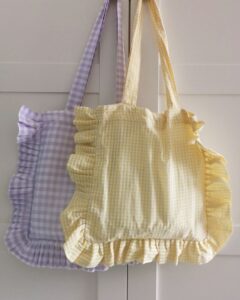
Materials and Preparation for Your Fabric Bag Pattern with Ruffles
Before beginning your fabric bag pattern with ruffles, gather all the materials needed for the project. Preparing everything in advance makes the sewing process easier and helps you avoid unnecessary interruptions. Cotton fabric is an excellent choice because it is easy to handle, comes in many attractive prints, and provides enough structure for a casual everyday bag.
For the main body, choose a medium-weight cotton fabric. You will also need a coordinating fabric for the ruffles, although using the same material throughout the project can create a beautiful, coordinated appearance. If you prefer a more decorative result, select a contrasting print for the ruffle section.
Basic sewing supplies include fabric scissors, a measuring tape, pins or sewing clips, matching thread, a sewing machine, an iron, and a fabric marking pencil. A seam ripper can also be useful if you need to correct a stitch or adjust a seam during assembly.
For a medium-sized bag, prepare two rectangular fabric panels measuring approximately 16 inches wide by 18 inches tall. These measurements can be adjusted according to your preferences. Cut two additional lining panels using the same measurements if you want a more polished interior.
For the decorative ruffles, cut two long fabric strips approximately 5 inches wide. Their combined length should be about 1.5 to 2 times the width of the area where you plan to attach them. This extra length allows you to gather the fabric and create the characteristic soft folds.
Finally, prepare two handle strips measuring approximately 4 inches wide by 24 inches long. You can adjust the length depending on whether you prefer carrying the bag by hand or over your shoulder. Press all fabric pieces before sewing to remove wrinkles and make cutting more accurate.
Step-by-Step Instructions for Sewing the Ruffled Fabric Bag
The first step in this fabric bag pattern with ruffles is preparing the main body. Place the two exterior fabric panels together with their right sides facing each other. Align the edges carefully and secure them with pins or sewing clips. Sew along both side edges and the bottom edge, using approximately a half-inch seam allowance. Leave the top completely open.
After sewing the main body, finish the raw edges with a zigzag stitch or another suitable seam-finishing technique. This helps prevent the fabric from fraying during regular use. Turn the exterior bag right side out temporarily to inspect the seams and make sure the shape looks even.
Now it is time to prepare the decorative ruffles. Take each long fabric strip and fold approximately half an inch toward the wrong side along one long edge. Press the fold with an iron to create a clean finish. Sew a narrow hem along this edge. This will become the visible lower edge of the ruffle.
To gather the fabric, sew two parallel rows of long machine stitches along the opposite long edge of each strip. Do not backstitch at the beginning or end. Leave enough thread tails so you can gently pull them to create the gathers. Work slowly and distribute the folds evenly to avoid creating bulky sections.
Once the ruffles have been gathered, place them against the exterior of the bag in your preferred arrangement. You can position one ruffle near the upper section and another below it, or create a single decorative band around the front. Adjust the gathers until the fabric looks balanced and attractive. Pin everything securely before sewing.
Attach the gathered sections to the bag using a straight stitch, following the gathering line. Check that the ruffles are evenly distributed and that the stitching remains secure. If you want a particularly neat result, reinforce the beginning and end of each seam. Your ruffled fabric bag is now beginning to take shape, with its decorative details adding personality to the simple fabric structure.
Adding the Handles, Lining, and Finishing Details
The handles are an important part of this fabric bag pattern with ruffles because they influence both the appearance and comfort of the finished accessory. Begin by folding each handle strip in half lengthwise, with the wrong sides together, and pressing it. Open the strip, fold both long raw edges toward the center crease, and press again. Fold the strip in half once more so that the raw edges are enclosed.
Sew along both long edges of each handle using a straight stitch. This creates a strong, neat handle that can withstand regular use. If you prefer extra durability, sew a second line of stitching close to the first one. Repeat the process with the second handle.
Position the handles along the top edge of the exterior bag, measuring carefully to ensure that they are symmetrical. For a medium-sized bag, placing each handle approximately 4 inches from the side seams is a good starting point. Make sure the handles are not twisted before pinning them in place.
Next, prepare the lining. Place the two lining panels with their right sides facing each other. Sew along the side edges and bottom edge, leaving a small opening in the bottom seam if you want to turn the finished bag through that opening. Keep the top edge open.
Insert the exterior bag into the lining so that their right sides are facing each other. The handles should be positioned between the two layers. Align the upper edges and side seams carefully, then pin around the entire opening. Sew around the top edge with a consistent seam allowance, taking care not to catch the ruffles in the stitching.
Turn the bag right side out through the opening in the lining. Gently push out the corners and arrange the handles. Close the opening in the lining with a neat machine stitch or an invisible hand stitch. Push the lining inside the bag and press the top edge carefully. For an extra professional finish, sew a line of topstitching around the upper opening. This helps keep the lining in place and gives the handmade fabric bag with ruffles a clean, finished appearance.
Customization Ideas, Care Tips, and Frequently Asked Questions
One of the most enjoyable aspects of this fabric bag pattern with ruffles is the freedom to customize it. You can experiment with different fabric combinations to create accessories for various seasons and occasions. Soft floral prints are perfect for a romantic appearance, while gingham and striped fabrics create a charming country-inspired style.
You can also change the size of the bag according to its intended purpose. A smaller version works beautifully as a gift bag or accessory pouch, while a larger version can be useful for carrying craft supplies, books, or everyday essentials. Remember to adjust the handle length and ruffle dimensions proportionally when changing the measurements.
For a more personalized result, consider adding a small fabric bow, a decorative button, or a coordinating pocket to the exterior. These details can make your project look distinctive without requiring complicated sewing techniques. You can also use different colors for the lining and handles to create an interesting contrast.
Proper care will help preserve the beauty of your handmade bag. Before washing it, check the fabric manufacturer’s care recommendations. Cotton bags can often be washed using a gentle cycle, but delicate decorative details may benefit from hand washing. Avoid excessive heat when ironing the ruffles, as this can flatten their natural shape.
If you intend to use your bag frequently, reinforce the handle attachment points with additional stitching. These areas experience more tension than other parts of the bag. You can also consider adding lightweight interfacing to the exterior fabric if you want a firmer structure. These small improvements can make your ruffled fabric tote bag more durable and comfortable.
Frequently Asked Questions (FAQ)
1. Is the fabric bag pattern with ruffles suitable for beginners?
Yes! This project is suitable for beginners who have basic experience using a sewing machine. The construction involves straight seams, simple hems, gathering stitches, and handle preparation. Taking your time with the measurements and pressing each section will make the process easier.
2. What is the best fabric for making a ruffled fabric bag?
Medium-weight cotton is one of the best choices because it is easy to sew, widely available, and comes in many patterns. Quilting cotton is also a popular option. For a stronger structure, you can add lightweight interfacing to the exterior panels.
3. How much fabric do I need for this sewing project?
The amount depends on the final dimensions of your bag and the number of decorative ruffles. For a medium-sized project, approximately one yard of main fabric and half a yard of coordinating fabric can be a useful starting point. You may need additional material for the lining, depending on your design.
4. How do I make the ruffles look full and evenly gathered?
Cut your ruffle strips approximately 1.5 to 2 times longer than the area where they will be attached. Sew two parallel gathering lines and gently pull the thread tails. Distribute the folds evenly with your fingers before attaching the ruffles to the bag.
5. Can I make this bag without a sewing machine?
Yes, you can make a fabric bag by hand sewing, although the process will take longer. Use small, consistent stitches and reinforce the handles and bottom seams carefully. A sewing machine is recommended if you want to complete the project more quickly.
6. How can I make my fabric bag stronger?
Use durable fabric, reinforce the handle attachment points, and sew secure seams along the sides and bottom. Adding interfacing to the exterior panels can also improve the structure. For heavier items, consider using a stronger fabric for the handles and bottom section.
7. Can I use different fabrics for the ruffles and the main bag?
Absolutely! Combining different fabrics is a wonderful way to personalize your project. Floral prints, polka dots, gingham, and solid colors can work beautifully together. Choose materials with similar weights to make sewing and gathering easier.
8. How do I prevent the fabric from fraying?
Finish exposed raw edges using a zigzag stitch, an overlock stitch, or another appropriate seam-finishing method. You can also use fabrics that fray less easily. Properly finishing the seams helps your handmade bag maintain its appearance over time.
9. Can I add an interior pocket to the bag?
Yes. Before assembling the lining, cut a rectangular piece of fabric for the pocket. Hem the upper edge, fold the remaining edges inward, and sew the pocket onto one lining panel. Position it at a comfortable height so you can easily access small items.
10. How can I make the ruffled fabric bag look more professional?
Careful preparation makes a significant difference. Press the fabric before cutting, maintain consistent seam allowances, distribute the gathers evenly, and use matching thread. Finish the top edge neatly and make sure both handles are positioned symmetrically.
11. Can I change the dimensions of the bag pattern?
Yes. You can make the bag wider, taller, or smaller according to your needs. Remember to adjust the lining, handles, and ruffle strips to match the new dimensions. It is also helpful to make a paper template before cutting expensive fabric.
12. What can I use a handmade ruffled fabric bag for?
This versatile accessory can be used for shopping, carrying books, organizing craft supplies, storing personal belongings, or giving handmade gifts. Its decorative appearance makes it suitable for everyday use as well as special occasions.
Conclusion
Creating a Fabric bag pattern with ruffles is a wonderful way to combine practical sewing skills with creativity and personal style. Throughout this tutorial, you learned how to select suitable materials, measure and cut the fabric, construct the main bag body, prepare beautiful gathered ruffles, and assemble sturdy handles. You also discovered how to add a lining, reinforce important seams, and personalize the finished accessory with different fabrics and decorative details.
The best part of this project is that you can adapt almost every detail to suit your preferences. From choosing delicate floral prints to experimenting with contrasting colors and different bag sizes, every handmade version can have its own unique personality. With patience, careful stitching, and a little imagination, you can create a beautiful and functional accessory that you will be proud to use or give as a gift.
Now it is your turn to try this ruffled fabric bag sewing pattern! We would love to hear your honest opinion about the tutorial. Did you enjoy making the ruffles? Would you choose a floral fabric, a solid color, or a combination of different prints? Leave your sincere feedback, questions, and suggestions in the comments. Your ideas can inspire other sewing enthusiasts to create their own beautiful handmade fabric bags!