
Fabric baguette bag pattern projects are the perfect combination of elegance, functionality, and creativity. Inspired by the iconic shoulder bags that have remained fashionable for decades, a Fabric baguette bag pattern allows you to create a timeless accessory that complements both casual and formal outfits.
One of the greatest advantages of making your own Fabric baguette bag pattern is the freedom to personalize every detail.
In this complete guide, you will learn how to recreate a beautiful Fabric baguette bag pattern using the measurements illustrated in the project. We will cover the required materials, cutting instructions, assembly process, sewing techniques, finishing details, and professional tips that help transform simple fabric into a polished handmade handbag. By following each step carefully, you’ll gain confidence while improving your sewing skills and creating an accessory you’ll be proud to use.
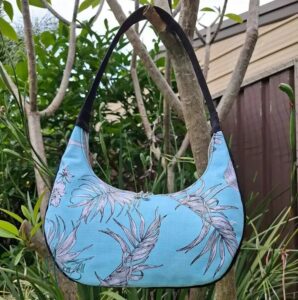
Materials and Preparing Your Fabric Baguette Bag Pattern
Before starting your Fabric baguette bag pattern, gather all the materials you need. Proper preparation makes the sewing process much easier and helps produce professional-looking results.
For the exterior, choose medium-weight cotton canvas, linen, denim, twill, or upholstery-weight cotton. These fabrics provide enough structure while remaining comfortable to sew. For the lining, lightweight quilting cotton works beautifully and adds a smooth interior finish.
According to the pattern shown, prepare two mirrored outer body panels measuring approximately 30 cm wide by 27.5 cm high, following the curved top shape illustrated. Also cut two lining panels using the same pattern.
Cut two side panels using the tapered side pattern shown in the diagram. Each side piece measures approximately 27.5 cm in height with a bottom width of about 6.6 cm. These side gussets give the bag its practical depth.
For the shoulder strap, cut one strip measuring 30 cm long by 6 cm wide (or adjust the length if you prefer a longer shoulder fit). Interface the strap with medium-weight fusible interfacing for extra durability.
In addition to the fabric pieces, prepare medium-weight fusible interfacing for the outer panels, matching sewing thread, fabric scissors, pins or clips, a ruler, tailor’s chalk, an iron, a sewing machine, one adjustable strap slider if desired, and an optional magnetic snap or zipper closure.
Cutting and Sewing the Fabric Baguette Bag Pattern
Begin by pressing all fabrics thoroughly before cutting. Smooth fabric produces much more accurate pattern pieces and improves sewing precision throughout the project.
Fuse interfacing to the wrong side of both outer body panels and side gussets. Interfacing provides the structured appearance seen in the finished bag while helping it maintain its shape during everyday use.
With right sides together, sew each side gusset to the front body panel using a 1 cm seam allowance. Clip the seam allowances slightly along the curved sections to help the fabric lie flat without puckering.
Next, align the back body panel with the attached gussets and stitch around both sides and the bottom edge. Sew slowly around the curves, making small adjustments to keep the edges perfectly aligned.
Repeat the same construction process for the lining pieces. If you plan to include an interior pocket, sew it onto one lining panel before assembling the lining bag.
Leave a small opening of approximately 10–12 cm along the bottom seam of the lining. This opening will later allow you to turn the finished bag right side out.
Creating the Strap and Finishing the Fabric Baguette Bag Pattern
To make the shoulder strap for your Fabric baguette bag pattern, fold the fabric strip lengthwise with right sides together and stitch along the long edge using a 1 cm seam allowance.
Turn the strap right side out using a turning tool or safety pin. Press carefully so the seam sits centered along the underside of the strap for a clean appearance.
Topstitch both long edges approximately 3 mm from the edge. This reinforces the strap while giving it the polished finish commonly found on professionally manufactured handbags.
Position the strap ends between the outer bag and the lining at the upper side corners. Ensure both ends are evenly aligned before securing them with clips or pins.
Insert the outer bag inside the lining with right sides facing each other. Stitch completely around the upper curved edge of the bag, carefully catching both strap ends securely within the seam.
Turn the bag through the opening left in the lining. Push out all corners gently, close the lining opening with a hidden stitch or machine stitch, then press the upper edge before adding a final row of topstitching around the opening.
Professional Tips and Creative Ideas for Your Fabric Baguette Bag Pattern
Choosing high-quality interfacing significantly improves the final appearance of your Fabric baguette bag pattern. A structured bag maintains its elegant silhouette much longer during regular use.
When sewing curved seams, reduce your machine speed. Slower stitching provides better control and creates smoother, more professional curves without puckering.
If you’d like extra storage, add an interior zipper pocket or a divided slip pocket before assembling the lining. These simple additions greatly increase the bag’s practicality.
Decorative details such as embroidery, quilting, contrast piping, lace trim, decorative stitching, or handmade fabric flowers can personalize your bag without changing the overall construction.
Experiment with different fabric combinations. Linen paired with floral cotton lining creates a romantic look, while denim combined with striped lining produces a modern everyday handbag.
Once you’ve mastered this Fabric baguette bag pattern, you can easily adjust the dimensions to create larger shoulder bags, compact evening bags, or mini handbags using the same construction method.
FAQ About Fabric Baguette Bag Pattern
Is this Fabric baguette bag pattern suitable for beginners?
Yes. While curved seams require careful sewing, the construction itself is straightforward and suitable for confident beginners with basic sewing machine experience.
Which fabric works best for this bag?
Medium-weight cotton canvas, denim, linen, twill, and upholstery cotton all produce excellent results because they provide stability without becoming too bulky.
Should I use interfacing?
Absolutely. Fusible interfacing helps the bag maintain its elegant shape, prevents sagging, and creates a more professional finish.
Can I add a zipper closure?
Yes. A zipper can easily be installed along the upper opening before attaching the lining, offering additional security for personal belongings.
Can I adjust the strap length?
Certainly. Simply cut a longer fabric strip if you prefer the bag to sit lower on your shoulder or convert it into a crossbody version.
How do I make the bag more durable?
Use reinforced stitching on the strap attachments, quality interfacing, strong polyester thread, and backstitch at all stress points.
Can I wash the finished bag?
Most cotton and linen versions can be gently hand washed. However, always consider the fabric type, interfacing, and any hardware before cleaning.
Can I customize the design?
Yes. You can personalize your Fabric baguette bag pattern with quilting, decorative embroidery, appliqués, contrast stitching, pockets, magnetic closures, buttons, or fabric embellishments to create a completely unique handmade accessory.
In conclusion, this Fabric baguette bag pattern demonstrates how a few carefully cut fabric pieces can be transformed into an elegant and practical handmade handbag.
Throughout this guide, you learned how to prepare the materials, cut each pattern piece according to the illustrated measurements, apply interfacing for structure, assemble the body and side gussets, construct a durable shoulder strap, install the lining, and finish the bag with professional sewing techniques.
You also discovered several customization ideas that allow you to adapt the design to your personal style while improving both functionality and appearance. With patience and attention to detail, this project becomes an enjoyable way to practice sewing curved seams and create a beautiful accessory that can be used daily or given as a thoughtful handmade gift. I hope this tutorial inspires you to start your own Fabric baguette bag pattern today. If you enjoyed this guide, please leave your honest opinion and share your suggestions or creative ideas in the comments. Your feedback is always appreciated and helps inspire future sewing tutorials.