
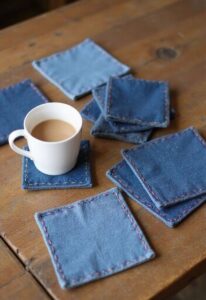
Square denim coaster pattern is a practical and creative project that transforms a simple piece of denim into a useful handmade accessory for your home.
One of the advantages of following a Square denim coaster pattern is that the construction is simple enough for beginners while still offering possibilities for experienced makers to personalize the design.
For this tutorial, the Square denim coaster pattern will focus on making a finished coaster approximately 4½ inches by 4½ inches, a comfortable size for coffee mugs, glasses, and small cups. You will need two denim squares measuring approximately 5 inches by 5 inches, plus an optional 5-inch square of thin cotton batting or lightweight interfacing if you want additional body. Other useful supplies include coordinating sewing thread, fabric scissors or a rotary cutter, a ruler, pins or sewing clips, an iron, and a sewing machine. Denim can vary considerably in thickness, so medium-weight fabric is generally easier to handle than extremely heavy jeans material. The measurements can also be adjusted if you prefer larger or smaller coasters.
Materials, Measurements, and Preparing the Denim
Before cutting the fabric, inspect the denim carefully. A successful Square denim coaster pattern begins with pieces that are clean, flat, and free from damaged areas. If you are repurposing old jeans, wash and dry them before beginning so the fabric has already experienced normal shrinkage. Press the usable sections with an iron at a suitable temperature. Removing wrinkles before measuring is important because even a small fold can affect the accuracy of a compact square project.
For one coaster, cut two denim squares measuring 5 x 5 inches. These pieces will become the front and back. If you want a softer and slightly thicker coaster, cut one square of thin batting approximately 4¾ x 4¾ inches. Keeping the batting slightly smaller can reduce bulk around the seam allowance. This simple cutting method makes the denim coaster sewing pattern accessible even if you do not own complicated quilting tools.
Accurate cutting is one of the most important parts of this project. Use a quilting ruler or another reliable straightedge to confirm that each corner forms a 90-degree angle. A rotary cutter is convenient, but sharp fabric scissors can produce equally good results when used carefully. Mark measurements on the wrong side of the fabric whenever possible. Precise squares make it much easier to achieve clean corners during the final stages.
The term square denim coaster describes more than the finished shape. The square construction provides four straight sewing lines, making it an excellent project for practicing consistent seam allowances. Beginners can use a ¼-inch or ⅜-inch seam allowance, depending on their comfort level and the thickness of the denim. The most important thing is to maintain the same allowance around the project so the finished coaster remains symmetrical.
If your denim is particularly thick, avoid unnecessary layers. Very heavy denim combined with thick batting may create bulky corners that are difficult to turn and topstitch. Lightweight cotton batting, thin fusible fleece, or even no internal layer at all can work well. Denim already has more natural structure than many quilting cottons, which means a simple two-layer coaster can still feel substantial.
You can also use this preparation stage to plan the appearance of your coaster. Position faded areas, original jeans seams, or contrasting denim shades intentionally rather than randomly. A small section of naturally worn denim can give an upcycled denim coaster distinctive character. If making a set, decide whether you want every coaster to match or whether each one will feature a different section of recycled fabric.
Step-by-Step Square Denim Coaster Pattern
Begin by placing the two denim squares with their right sides facing each other. If you are using batting, place it against the wrong side of one denim square. Align all four edges carefully and secure the layers with sewing clips or pins. Clips can be particularly convenient with thicker denim because they hold multiple layers without requiring a pin to pass through dense fabric.
Sew around the perimeter using your selected seam allowance. Start along one side rather than directly at a corner. Continue around all four sides while leaving an opening approximately 2 to 2½ inches wide. This opening will allow you to turn the Square denim coaster pattern right side out. Backstitch at both ends of the opening so the stitches remain secure during turning.
When approaching each corner, slow down as the needle reaches the turning point. Stop with the needle lowered into the fabric, lift the presser foot, rotate the coaster 90 degrees, lower the presser foot, and continue sewing. This technique helps create a crisp square seam line. Consistent corners are particularly noticeable on small projects, so working slowly usually produces better results than rushing.
After sewing, trim excess fabric from each corner without cutting through the stitching. Removing a small diagonal triangle from the seam allowance reduces bulk and helps the corners turn outward more neatly. If the denim is heavy, you can also grade the seam allowances slightly. Be conservative when trimming because leaving too little fabric beside the stitching may weaken the seam.
Turn the coaster right side out through the opening. Use your fingers or a blunt turning tool to gently shape each corner. Avoid pushing aggressively with a sharp object because it may puncture the fabric or seam. Once all four corners are formed, roll the edges between your fingers so the seam sits directly along the outer edge. Press the entire coaster carefully.
Fold the raw edges of the turning opening inward so they align with the finished edge. Press them in place and secure the opening with clips if necessary. Topstitch around the entire coaster approximately ⅛ inch from the edge. This final line closes the opening and gives the handmade denim coaster a neat, structured border. A slightly longer stitch length can look especially attractive on denim.
Decorative Details, Variations, and Professional Finishing
Once you understand the basic Square denim coaster pattern, you can personalize it in many ways without changing the fundamental construction. Contrasting topstitching is one of the simplest options. Golden, cream, tan, or another coordinating thread can create the familiar appearance associated with traditional jeans stitching. Matching blue thread, on the other hand, produces a more subtle and minimalist result.
Patchwork is another attractive variation. Instead of using one 5-inch denim square for the front, join smaller denim pieces until the assembled panel is large enough to trim to 5 x 5 inches. Different washes of denim can create visual movement while preserving the practical qualities of the material. Press patchwork seams carefully before assembling the coaster to reduce unnecessary thickness.
You can also combine denim with cotton fabric. Use denim for the top and a printed cotton square for the back, or create a front panel featuring both materials. This variation allows seasonal prints, floral fabrics, geometric patterns, or neutral colors to become part of the design. When combining fabrics with different weights, pressing and accurate pinning become especially important.
Decorative quilting can give the denim coaster pattern additional texture. Before final assembly, stitch simple parallel lines, a grid, diagonal lines, or a large X across the front denim and batting layers. Keep the design uncomplicated so it complements rather than overwhelms the natural texture of the fabric. Straight-line quilting is beginner-friendly and can help stabilize lightweight batting.
For a coordinated handmade set, prepare four or six coasters at the same time. Batch sewing makes the process faster because you can complete the same step on every coaster before moving to the next stage. Cut all pieces first, assemble all layers, sew the perimeters, turn the pieces, press them, and finally complete the topstitching. This approach helps maintain consistent measurements throughout the set.
Professional finishing depends more on patience than complicated techniques. Check that the corners are similar, the topstitching remains an even distance from the edge, and loose thread tails have been trimmed. Press the finished coaster once more if necessary. These small details can transform a basic DIY denim coaster into an attractive handmade item suitable for your own table, a housewarming present, or a thoughtful craft gift.
Troubleshooting, Care, and Tips for Better Results
One common problem when sewing denim is skipped stitches. This can happen when the needle is too fine for the fabric or when several thick layers meet at a corner. A fresh needle appropriate for denim or heavier woven fabrics can make sewing more reliable. Sew slowly across bulky areas and avoid pulling the project from behind the presser foot, as this can interfere with the machine’s normal fabric feeding.
Bulky corners are another frequent challenge. If the corners of your Square denim coaster pattern look rounded rather than crisp, check whether excess seam allowance was removed before turning. Carefully trimming the corner diagonally usually improves the shape. With especially heavy denim, reducing some of the internal seam bulk can make a noticeable difference.
If the finished coaster looks slightly distorted, inaccurate cutting or inconsistent seam allowances may be responsible. Measure every square before sewing and use a seam guide when possible. Pressing is equally important. Rather than stretching the denim with the iron, press it into position by lifting and lowering the iron. This helps preserve the intended square dimensions.
Washing requirements depend on the materials used. A coaster made entirely from washable denim, cotton backing, and suitable batting can generally be cleaned gently when needed. Prewashing recycled denim before construction is especially useful because it removes dirt and allows most initial shrinkage to happen before sewing. Always consider the care requirements of decorative materials if you add embellishments.
For everyday practicality, avoid decorations that create an unstable surface beneath the cup. Large buttons, beads, thick appliqués, or bulky knots may look interesting but can cause a glass or mug to wobble. Flat stitching and low-profile fabric details are better choices for a functional recycled denim coaster. The main purpose should remain protecting the surface while providing a stable place for a drink.
Finally, save your denim scraps after completing the project. Even pieces too small for a complete coaster can become patchwork sections for another set. Sorting scraps by shade can make future projects easier to plan. The Square denim coaster pattern is particularly well suited to sustainable crafting because its modest dimensions allow many leftover pieces to be used productively instead of discarded.
FAQ About the Square Denim Coaster Pattern
What size should a square denim coaster be?
A finished size between approximately 4 and 5 inches square works well for most mugs and drinking glasses. This tutorial starts with 5 x 5-inch fabric pieces and produces a slightly smaller finished coaster after accounting for seam allowances.
Is denim suitable for making coasters?
Yes. Denim fabric is durable, washable, and naturally structured, which makes it a practical material for reusable coasters. Medium-weight denim is usually easier to sew than very heavy fabric.
Do I need batting inside a denim coaster?
Batting is optional. Thin batting provides extra cushioning and can improve absorbency, but denim itself already has useful body. If your fabric is thick, two layers of denim may provide enough structure without additional batting.
Can old jeans be used for this project?
Absolutely. An upcycled denim coaster is a useful way to repurpose sections of old jeans that are still in good condition. Wash the jeans first and avoid areas that are extremely stretched, damaged, or weakened.
What needle should I use when sewing denim?
A needle intended for denim or heavier woven fabrics is often the best choice, particularly when sewing through several layers. The appropriate size depends on the exact weight of your fabric and thread.
How can I make the corners look sharper?
Sew accurately, trim the corner seam allowances diagonally, turn the project carefully, and gently shape each corner with a blunt tool. Pressing afterward also helps define the square shape.
Can I make this project without a sewing machine?
Yes, although hand sewing will take longer. Use small, consistent stitches and strong thread. The opening can also be closed neatly by hand if you prefer not to topstitch the entire perimeter.
Can different denim colors be combined?
Yes. Light, medium, and dark denim can create an attractive patchwork effect. Mixing shades is one of the easiest ways to make a basic Square denim coaster pattern more distinctive without introducing complicated construction techniques.
How many coasters should I make for a set?
Sets of four or six are practical for many households, but there is no fixed rule. Making several pieces together can also save time because cutting, sewing, turning, and pressing can be completed in batches.
How do I keep the coaster flat?
Use lightweight batting, avoid overly bulky decorations, trim thick seam allowances carefully, and press the coaster after turning. Even topstitching around the perimeter also helps keep the layers stable and flat.
Is this project suitable for beginners?
Yes. The project mainly requires straight cutting, basic seams, turning, pressing, and topstitching. Because the pieces are small, it is a manageable way to practice sewing denim before attempting larger bags, garments, or home accessories.
Can I change the dimensions of the pattern?
Certainly. Simply enlarge or reduce both fabric squares while keeping the seam allowance consistent. For larger mugs or small serving dishes, you may prefer a finished coaster closer to 5 or 6 inches square.
Conclusion
The Square denim coaster pattern demonstrates how a simple piece of fabric can become a useful, attractive, and reusable household accessory. Throughout this tutorial, you learned how to select and prepare denim, cut accurate squares, add optional batting, sew the perimeter, trim the corners, turn the coaster, close the opening, and complete professional-looking topstitching. You also learned how contrasting thread, patchwork construction, cotton backing, and decorative quilting can transform the basic design into something more personal.
This project is particularly useful for anyone interested in practical sewing and fabric reuse. Old jeans and leftover denim can become coordinated handmade denim coasters rather than remaining unused, while the straightforward square construction provides valuable practice with accurate cutting and straight seams.
Once you have completed your first coaster, experiment with different denim shades, stitching designs, sizes, and fabric combinations to create your own version of the pattern. If you try this Square denim coaster pattern, leave your sincere opinion about the project and share your suggestions for future patterns. Your ideas and creative variations can inspire new ways to make simple handmade projects even more useful and enjoyable.